
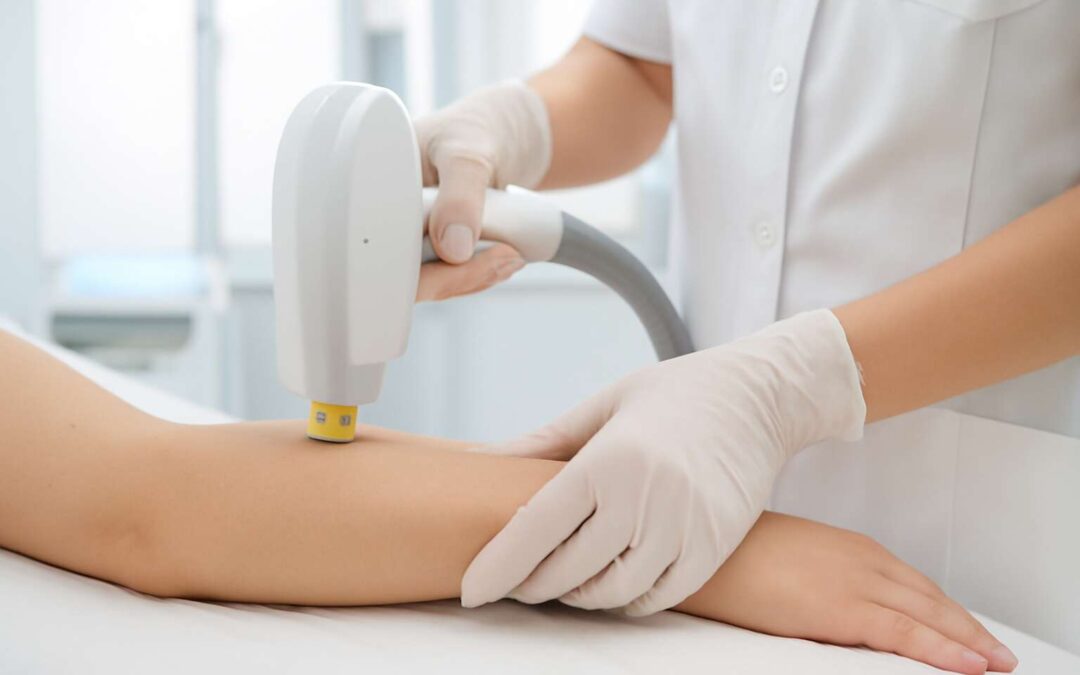
Understanding keratosis pilaris and laser treatment basics
What keratosis pilaris is and how it affects hair follicles
“Smooth skin starts with understanding your follicles,” a leading dermatologist says. Keratosis pilaris leaves the skin rough and bumpy as keratin plugs the hair follicles along arms, thighs, and cheeks. The issue can feel stubborn, but clarity on basics makes it manageable.
Understanding keratosis pilaris and laser treatment basics: KP is a benign condition where keratin blocks the hair follicle, causing tiny bumps and dry patches. Hair grows through these irritated follicles, which can worsen texture. The laser hair removal treatment for keratosis pilaris uses focused light to target pigment in the follicles, potentially reducing hair density and easing friction against the bumps.
- Laser energy targets follicles, not the keratin plugs that sit on the surface.
- Most patients need several sessions for noticeable improvement.
- Suitability varies with skin tone and sun exposure habits common in SA.
Used thoughtfully, this approach fits into a broader care plan for KP in South Africa, with clinics offering safe options for diverse skin types.
How laser hair removal works on KP-affected hair and skin
Under the South African sun, lasers walk a careful line between pigment and tissue. For KP-affected hair, the pulse targets the follicle’s pigment, not the keratin dimples on the surface. The result? a gentler passage for hair strands, reducing density and easing the drag of texture as you move!
This is the essence of the laser hair removal treatment for keratosis pilaris. Most patients require several sessions to notice a substantial thinning, and clinicians tailor parameters to skin tone, hair color, and sun exposure habits common here.
- Light energy aims at pigment in follicles
- Sessions multiply gradually for steady progress
- Skin-tone considerations guide safety and results
Shadows recede as order returns to the skin, a quiet balance between science and resilience.
Why shaving vs. waxing vs. laser matters for KP
Nearly 3 in 10 people with keratosis pilaris in South Africa report smoother texture after laser interventions, a statistic that lights a path through stubborn skin. The approach blends precision with patience, turning dimples into manageable texture and giving skin room to breathe.
For many KP sufferers, the choice isn’t just about hair removal; it’s about treating the surface with care. The laser hair removal treatment for keratosis pilaris targets pigment in follicles, aiming for a gentler passage over a keratin-dimpled landscape—and it often redefines how skin feels beneath the hands.
Shaving scrapes the surface; waxing can tug at KP-affected skin and stir irritation. If you’re weighing options, consider these:
- Shaving offers quick upkeep with minimal surface change
- Waxing lasts longer between sessions but may irritate textured skin
- Laser delivers longer intervals between appointments and progressive texture relief
Across clinics in South Africa, therapists tailor parameters to skin tone, hair color, and sun exposure habits, balancing safety with steady results.
Key laser technologies used for KP: diode, Nd:YAG, Alexandrite
KP wears its texture like a constellation on the skin, and progress glows softly in South Africa—nearly three in ten people report smoother texture after laser interventions. This laser hair removal treatment for keratosis pilaris offers a gentler passage for stubborn follicles.
Lasers target pigment in the hair follicles, delivering a precise warmth that softens the keratin-dimpled landscape without harsh surface trauma. Across sessions, the texture evolves while the skin maintains its breath and resilience.
Key laser technologies used for KP include:
- Diode lasers provide a versatile option across skin tones with efficient follicle targeting.
- Nd:YAG lasers (1064 nm) offer deeper penetration with a higher safety profile for darker or sun-exposed skin.
- Alexandrite lasers (755 nm) are effective for lighter complexions and finer hair, delivering rapid pulses.
Who qualifies as a good candidate for laser hair removal with KP
Nearly three in ten South Africans report smoother texture after laser interventions, a punchy statistic that makes keratosis pilaris readers sit up and listen to a different skin story.
Understanding who qualifies as a good candidate for the laser hair removal treatment for keratosis pilaris helps set realistic expectations. Ideal clients are adults with stable skin, a commitment to a multi‑session plan, and hair in the target zones. Those with darker skin can still benefit when a skilled clinician selects the appropriate laser and doses the treatment safely.
- Age 18 or older
- Stable health and no active skin disease in the area
- Realistic goals about hair reduction and texture improvement
- Not pregnant or breastfeeding; not on medications that affect healing
- Dark, coarse hair responds best; others may see more modest gains
Medical teams assess candidacy and align expectations, balancing comfort, downtime, and the pursuit of smoother, keratin-kissed skin.
Laser technologies suitable for keratosis pilaris patients
Nd:YAG, diode, and Alexandrite lasers: differences and use cases
Across South Africa, clinics report that eight of ten clients see noticeably smoother skin after a course of laser hair removal treatment for keratosis pilaris. Understanding the technologies helps tailor sessions for KP-prone skin and keeps the conversation classy in a country of vibrant complexions.
Three lasers are most common for KP: Nd:YAG, diode, and Alexandrite—each with a different magic wand for stubborn follicles.
- Nd:YAG (1064 nm): deep penetration, safer for darker skin tones
- Diode (800–810 nm): versatile, effective on a wide range of hair colors
- Alexandrite (755 nm): fast, best for lighter skin but caution with KP
Choosing the right laser depends on hair thickness, skin tone, and tolerance for heat. In SA clinics, specialists tailor the plan to KP-prone skin, ensuring the laser hair removal treatment for keratosis pilaris remains precise and respectful of sensitivity.
Choosing the right laser for light vs. dark skin with KP
Across SA clinics, KP-prone skin benefits from a laser approach that respects tone and texture. Nd:YAG (1064 nm) penetrates deeply with a gentler heat profile, safer for pigmented skin. Diode lasers (800–810 nm) cover a wider range of hair colors, while Alexandrite (755 nm) can be fast but requires caution with KP. Clinicians tailor technology to balance efficacy with sensitivity.
Considerations by skin tone and KP:
- Light skin: Alexandrite offers speed, with pigment monitoring.
- Dark skin: Nd:YAG preferred for deeper penetration and reduced pigment risk.
- Hair attributes: thicker or coarser hair responds differently than fine hair.
- Heat management: cooling and session pacing influence comfort and outcomes.
Choosing the right laser for KP relies on matching technology to KP profiles, skin tone, and heat tolerance in a measured, respectful approach to laser hair removal treatment for keratosis pilaris.
Expected efficacy and number of sessions for KP treatment
Across South Africa, KP pricks the skin with stubborn texture, yet a measured laser journey can soften it. When technology aligns with tone and hair type, the roughness yields to a smoother, calmer canvas.
For many, the laser hair removal treatment for keratosis pilaris shows noticeable improvement after several sessions; most see results after 6–8 sessions, spaced 4–6 weeks apart.
- Expected efficacy: gradual smoothing of follicular bumps with continued improvement over sessions
- Session cadence: typically 6–8 initial treatments, with maintenance every 6–12 months
- Influencing factors: KP severity, skin tone, and hair thickness affect speed and outcomes
A personalised plan preserves safety and comfort, balancing efficacy with sensitivity.
Safety features and cooling methods to protect KP-prone skin
Across South Africa, the laser hair removal treatment for keratosis pilaris offers a refined path from rough texture to calmer skin. When precise wavelengths meet skilled technicians, KP’s stubborn prickles soften, revealing a smoother canvas that glows under afternoon sun and studio light alike!
Diode, Nd:YAG, and Alexandrite lasers each bring a distinct resonance to KP care. Together with adaptive cooling, they aim to spare the surface while guiding energy to hair follicles, delivering gradual improvement with safety at the fore.
- Dynamic cooling devices pre-cool the skin before each pulse
- Contact cooling sapphire tips maintain consistent surface temperatures
- Cryogen sprays or chilled air reduce heat around follicular areas
This careful orchestration yields comfort and confidence as sessions progress.
Common myths about laser types and KP outcomes
In South Africa, laser choices for KP feel like selecting a melody: diode, Nd:YAG, and Alexandrite each hum with a different resonance. Adaptive cooling protects the surface while guiding energy to follicles, delivering a calmer canvas and a hint of glow. For the laser hair removal treatment for keratosis pilaris, precision and patience walk hand in hand with texture-conscious care.
- Myth: Alexandrite is only for very fair skin; reality: with careful assessment, it can suit some KP clients.
- Myth: KP is cured after one session; reality: improvements come gradually over several visits.
- Myth: All lasers are equally safe for KP; reality: cooling and experienced operators matter.
Choosing the right approach for laser hair removal treatment for keratosis pilaris means balancing skin tone, hair type, and cooling technology for lasting glow.
Eligibility, safety, and planning for KP-focused laser treatment
Initial skin and hair assessment for KP patients
Across SA, laser hair removal treatment for keratosis pilaris is increasingly seen as a gateway to smoother skin—that’s why eligibility starts with a candid skin-and-hair map. In our intake, we assess KP distribution, hair texture, and any active patches to craft a plan that respects sensitive skin while aiming for lasting clarity.
Safety governs every decision: patch tests, protective eyewear, and cooling systems shield KP-prone skin. We discuss sun exposure, skincare routines, and medications so you can enter the treatment with confidence.
Planning translates to a practical calendar and transparent milestones—your laser hair removal treatment for keratosis pilaris journey is personalized to fit your South African lifestyle as you pursue healthier skin.
- Pre-treatment skin and hair assessment and patch test
- Clear sun protection and product-use plan to safeguard KP-prone skin
- Follow-up scheduling to monitor progress
Patch testing and trial sessions to gauge reaction
Eligibility begins with a candid skin-and-hair map, noting KP distribution and hair texture to shape a safe path. For many South Africans, the laser hair removal treatment for keratosis pilaris becomes a gateway to smoother skin, with a plan fit for local routines and seasons.
Safety governs every decision: patch tests, protective eyewear, and cooling systems shield KP-prone skin.
- Patch testing to gauge reaction
- Protective eyewear and real-time skin cooling
- Transparent disclosures of sun exposure, skincare products, and medications
Planning translates to a practical calendar and milestone checks—with patch testing and trial sessions gauging response before a full course—plus scheduled follow-ups to monitor progress and adjust as needed.
Medical disclosures and skincare routines before treatment
KP’s stubborn charm meets modern medicine: in South Africa, eligibility kicks off with a meticulous skin-and-hair map that highlights KP distribution and hair texture to shape a safe, tailored plan. The laser hair removal treatment for keratosis pilaris can be a gateway to smoother skin that fits neatly with local routines and seasons.
Safety governs every decision: patch tests, protective eyewear, and cooling systems shield KP-prone skin.
- Patch testing informs plan and individual sensitivity
- Protective eyewear is worn during every session
- Real-time cooling helps protect delicate KP-prone areas
Planning translates to a practical calendar and milestones, with full disclosures and skincare routines shaping the approach before treatment. Before you begin, share medications, supplements, and skincare products that could affect photosensitivity. A measured pre-treatment mindset—gentle cleansing, sunscreen, and moisturising—supports the laser hair removal treatment for keratosis pilaris.
Treatment frequency, scheduling, and realistic timelines
Eligibility for laser hair removal treatment for keratosis pilaris hinges on a stable skin picture and hair texture that laser targets safely. In South Africa, clinicians map KP distribution and medical history to craft a personalised plan.
Safety is non-negotiable: expect a pre-treatment assessment, protective eyewear during sessions, and cooling mechanisms that shield KP-prone skin. Real-time monitoring keeps everything within safe parameters.
Planning translates into a practical calendar and milestones. Pre-arrangements include full disclosures and a gentle skincare routine; treatments are typically spaced to allow healing and seasonal considerations, with progress reviewed at each stage.
Cost, financing, and insurance considerations for KP laser treatment
Eligibility for laser hair removal treatment for keratosis pilaris hinges on a stable skin picture and hair texture that laser targets safely. In South Africa, clinicians map KP distribution and medical history to craft a personalised plan—an atlas guiding your journey.
Safety is non-negotiable: expect a pre-treatment assessment, protective eyewear during sessions, and cooling mechanisms that shield KP-prone skin. Real-time monitoring keeps everything within safe parameters, like a steady lighthouse beam!
Planning translates into a practical calendar and milestones. Pre-arrangements include full disclosures and a gentle skincare routine; treatments are spaced to allow healing and seasonal considerations, with progress reviewed at each stage.
Cost, financing, and insurance considerations for laser hair removal treatment for keratosis pilaris vary.
- Session pricing and multi-session packages
- Financing options and payment plans
- Insurance coverage typically limited to medical necessity with documentation
What to expect during and after the laser procedure for keratosis pilaris
Step-by-step walkthrough of a typical session
KP remains a surprisingly common nuisance in South Africa, with up to 40% of adults noticing ongoing bumps and hair regrowth. This laser hair removal treatment for keratosis pilaris targets the follicle with precision, aiming for smoother skin and fewer flare-ups. Expect a brief, warming sensation paired with a reassuring cool touch.
During the session, the team follows a streamlined routine tailored for KP-prone skin. The steps, performed with care, include:
- Preparation and comfortable positioning; the area is cleansed.
- Protective eyewear, cooling, and laser settings calibrated to your skin.
- Short passes over the treated zone with brief, comfortable pauses.
- Post-treatment cooling and a soothing gel to calm the skin.
After the procedure, expect minimal downtime: mild redness that fades within hours and gradually smoother skin as regrowth slows. This laser hair removal treatment for keratosis pilaris is complementary to gentle skincare. Sunscreen and a light moisturiser can help, with follow-up sessions timed to your hair cycle.
Immediate post-treatment care and soothing routines
In South Africa, up to 40% of adults grapple with keratosis pilaris, a texture that makes smooth skin feel elusive. The laser hair removal treatment for keratosis pilaris targets the follicles with quiet precision, cooling as it works and gifting days of calmer, less reactive skin.
Immediately after treatment, expect a brief warming or tingling, with mild redness that fades within hours. A cooling gel is applied and you can resume normal activities quickly.
- Apply a fragrance-free cleanser and a gentle moisturiser to support the skin barrier
- Use a broad-spectrum sunscreen daily to protect the treated zone
- Avoid aggressive scrubs or friction for 24 to 48 hours
Over the coming weeks, you’ll notice the treated area looking calmer as hair regrowth slows and texture softens.
Managing temporary side effects: redness, swelling, and itching
In South Africa, up to 40% of adults grapple with keratosis pilaris, a texture that makes smooth skin feel elusive. The laser hair removal treatment for keratosis pilaris targets follicles with quiet precision, and most people notice a brief warm sensation or light tingling as the pulses work; the treated area may look mildly reddened right after but calms quickly.
What to expect during and after is straightforward. Common temporary side effects include:
- Redness
- Swelling
- Itching
These effects typically fade within a few hours to a couple of days, allowing you to resume normal activities soon after the session.
Sun protection and long-term skincare to protect KP-affected skin
During the session, the laser delivers a quick, warm pulse as it targets KP-affected follicles with precision. Most people notice a mild tingling or gentle heat, and the treated skin may look slightly reddened right after, which settles within a few hours.
Sun protection and long-term skincare play a role in maintaining results and protecting KP-affected skin between visits. Patients often see sun exposure limited after treatment, and clinicians frequently note broad-spectrum SPF and fragrance-free products as supportive for barrier health. This laser hair removal treatment for keratosis pilaris prioritizes gentle energy delivery and skin protection.
- Temporary redness or warmth typically fades within hours
- Minor tingling or sensitivity may persist briefly
- Skin generally returns to normal without downtime
KP-specific outcomes, risks, and alternatives in laser hair removal
What results look like for KP patients and how long they last
For people living with KP, smoother skin is achievable with the right approach. The laser hair removal treatment for keratosis pilaris can reduce hair density in affected follicles, easing irritation and softening the bumps over a course of sessions.
Risks are usually mild, but vary with skin tone. Expect temporary redness, mild swelling, and slight sensitivity. Pigment changes can occur, especially on sun-exposed areas. A patch test and cooling help protect KP-prone skin.
- Temporary redness and swelling
- Hyperpigmentation or lightening near treated areas
- Transient irritation if heat control isn’t optimal
Alternatives to laser removal for KP include electrolysis as a non-laser option and KP skincare, like gentle exfoliation and keratolytic creams; plus traditional hair removal methods (shaving, waxing, depilatories) between sessions. Choice depends on tolerance and lifestyle.
Results vary with hair growth and skin type. A clinician experienced with KP can tailor a plan that balances goals with skin comfort.
Possible risks and rare complications with KP-prone skin
Across South Africa, the laser hair removal treatment for keratosis pilaris offers a practical path to smoother skin. For KP-affected follicles, targeted light can reduce hair density and ease irritation over a course of sessions. When a clinician familiar with KP designs the plan, you get results that respect skin comfort while moving you toward longer stretches between treatments.
Risks are usually mild but vary with skin tone. Consider patch testing and cooling to protect KP-prone skin.
- Temporary redness and swelling
- Hyperpigmentation or lightening near treated areas
- Transient irritation if heat control isn’t optimal
Alternatives include electrolysis, KP-friendly skincare with exfoliation and keratolytic creams, and traditional methods (shaving, waxing) between sessions. The best choice depends on tolerance and lifestyle, and a KP-aware clinician can tailor a plan.
Alternatives to laser hair removal for KP management
In the clinic, laser hair removal treatment for keratosis pilaris can reduce hair density on KP-affected follicles and ease irritation over a course of sessions.
Risks are usually mild and vary with skin tone, with temporary redness, swelling, or transient irritation if heat is not well controlled.
Alternatives to laser hair removal for KP management include:
- Electrolysis
- KP-friendly skincare with exfoliation and keratolytic creams
- Shaving or waxing between sessions
Integrating hair removal with keratosis pilaris management: skincare and lifestyle tips
Smooth, calmer skin is within reach with laser hair removal treatment for keratosis pilaris. For KP-affected follicles, hair density often drops and irritation eases over a course of sessions. Risks are usually mild and vary with skin tone, with temporary redness, swelling, or transient irritation if heat is not well controlled. The strategy blends clinical laser sessions with KP-friendly skincare to maximize comfort and results in clinics across South Africa, indeed.
- Electrolysis
- KP-friendly skincare with exfoliation and keratolytic creams
- Shaving or waxing between sessions
Integrating hair removal with KP management means more than the clinic visit. Between sessions, keep skin moisturized, apply sunscreen, and avoid harsh scrubs; opt for gentle exfoliation 1-2 times weekly. In South Africa, consider lightweight, breathable fabrics and consistent sun protection to protect KP-prone skin long-term. This balanced approach puts laser hair removal treatment for keratosis pilaris at the heart of KP care.