
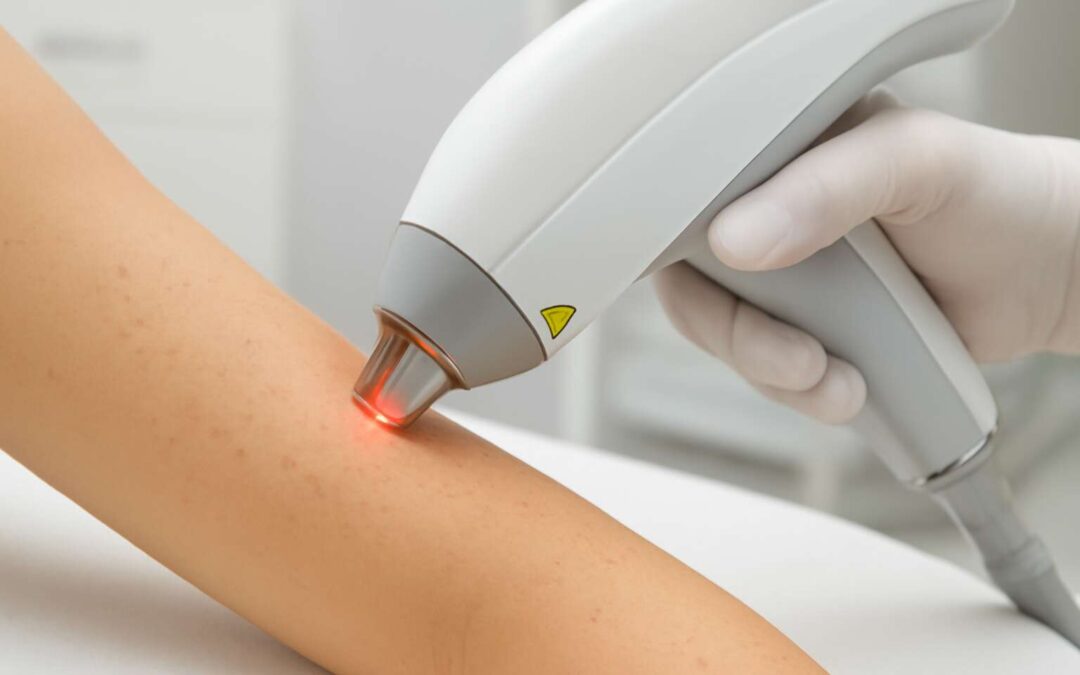
Understanding keratosis pilaris and laser hair removal
What KP is and how it appears on the skin
Across South Africa, keratosis pilaris shows up as tiny, rough bumps on arms or cheeks. Globally, KP touches up to 40% of adults at some point, a reminder that the condition is common, not rare. It stems from keratin clogging follicles, leaving a textured, gooseflesh-like surface.
That brings a key question: will laser hair removal help with keratosis pilaris? Light-based methods target hair follicles and can ease irritation from ingrown hairs, sometimes smoothing the skin’s surface. They don’t dissolve keratin buildup, but they can complement gentle skincare in the right cases.
- reduced follicular irritation
- fewer ingrown hairs
In South Africa’s diverse skin landscape, practitioners bring nuance to every treatment, balancing KP’s texture with hair-free comfort—a patient approach that invites a brighter, more confident glow.
How laser hair removal works in simple terms
Globally, KP touches up to 40% of adults at some point, a reminder that this texture is more common than a designer shade. In plain terms, laser hair removal uses a concentrated beam of light that targets the pigment in hair follicles, heating them enough to slow or halt growth. The aim is precision, not a passport to flawless skin.
A common query is: will laser hair removal help with keratosis pilaris? It can ease the irritation associated with ingrown hairs and shaving, making the surface feel softer without dissolving the keratin buildup itself.
- Reduced follicular irritation
- Fewer ingrown hairs
In South Africa’s diverse skin landscape, clinics tailor wavelengths and cooling to protect different tones, creating a smoother, more confident silhouette while respecting KP’s texture.
Why people consider laser treatment with KP
Understanding keratosis pilaris in the context of laser treatment reveals a subtle dynamic: will laser hair removal help with keratosis pilaris? The short answer is nuanced: laser can’t dissolve keratin buildup, but it can reduce the friction that triggers irritation, especially where hair and shaving meet the skin.
In South Africa, clinics tailor wavelengths and cooling to protect different tones, which can translate to less irritation and a smoother feel while respecting KP’s texture!
- Reduced follicular irritation
- Fewer ingrown hairs
This measured approach means patients can anticipate a gentler surface and a calmer shave, without promising a miracle—the KP texture remains, but the daily feel can soften.
How laser hair removal affects keratosis pilaris symptoms
Impact on skin texture and bumps
Light has a way of shifting the terrain of our skin. In KP’s stubborn map, a new ray can soften the ridges where hair follicles meet keratin. Industry data hints one in three sufferers notice smoother texture after a tailored laser approach. This raises the question: will laser hair removal help with keratosis pilaris? It can’t erase the keratin blocks, but it can lessen hair-induced friction and the inflammation that often sharpens bumps.
Consider these subtle shifts you might notice over a treatment course:
- Reduced irritation from shaving and clothing friction
- Smoother skin texture as follicles calm
- Fewer post-treatment bumps from inflammation
Taken together, the approach can soften a stubborn landscape without claiming to cure KP, offering a gentler canvas for everyday life.
Effects on redness and inflammation
Redness can resemble a watchful crimson sentinel along KP’s map, but a quiet blaze sits beneath it. Industry data hints one in three sufferers notice smoother texture after a tailored laser approach, and many ask: will laser hair removal help with keratosis pilaris in easing redness and inflammation? By singeing away stray hairs at the surface, the treatment can quiet the friction that stokes irritation and dampen the angry reddening that follows shaving or tight sleeves, giving the skin a calmer breath.
- Less shaving-induced irritation that reddens the skin
- Calmer follicles reduce flare-ups around the affected zones
- Fewer post-treatment redness and inflamed bumps as inflammation settles
In South Africa, where sun and fabric can conspire to provoke KP, that calmer canvas feels like a quiet victory. The keratin blocks remain, yet the surface can present a more even complexion for daily life.
Short-term vs long-term results for KP-prone skin
Short-term progress for KP-prone skin can feel like a quiet reprieve: less friction, fewer shave bumps, and calmer redness that doesn’t flare at every provocation. In the weeks after a tailored laser session, roughly one in three sufferers notice smoother texture as regrowth slows and follicles settle. The question “will laser hair removal help with keratosis pilaris” recurs among KP-prone patients, and the early wins come from easing surface irritation, even if the stubborn keratin blocks stay beneath the surface.
- Short-term: smoother texture, less shaving irritation, calmer redness
- Long-term: more even surface, fewer flare-ups, reduced need for frequent shaving
Longer-term outcomes depend on consistency. A thoughtful laser plan can leave KP-prone skin with a calmer canvas: fewer flare-ups, a more even surface, and less surface irritation during daily activities. In South Africa, sun-smart routines and careful pigment considerations are essential when planning sessions for darker skin tones, ensuring smoother skin without compromising safety.
Safety considerations for sensitive KP-affected skin
One in three KP-prone individuals notices smoother texture after a tailored laser session, a quiet shift beneath the skin’s restless surface. The common question: will laser hair removal help with keratosis pilaris. It can soften surface irritation and lessen shaving friction, letting daily life feel gentler, even while keratin blocks stay quietly beneath the surface. In the hands of skilled clinicians, the routine becomes a gentler tide across sunlit SA days.
- Meaningful pigment and sensitivity assessment: darker skin tones common in South Africa demand professional tuning of laser parameters.
- Sun exposure and pigment balance: balancing sun activity helps protect against unintended shifts in tone.
- Ongoing supervision by a trained clinician: KP texture and flare history guide a personalised approach.
Across the country, a fusion of clinical precision and compassionate care invites KP-prone skin to breathe anew, a softer surface for the everyday rhythm.
How many sessions are typically needed for KP patients
Across South Africa’s clinics, the question keeps surfacing: will laser hair removal help with keratosis pilaris? For KP-prone skin, a tailored session can soften surface irritation and reduce shaving friction, letting everyday life move with less resistance. The treatment nudges the hair follicles while easing the stubborn keratin blocks beneath the skin, so the surface feels calmer to the touch.
Most KP patients begin with a course of about 6 to 8 sessions, spaced roughly 4 to 6 weeks apart. With each visit, texture can become smoother and hair regrowth slows, giving longer intervals between shaves and fewer bumps on exposed areas.
- Hair density and growth cycles
- Severity and distribution of KP on your skin
- Skin tone and pigment balance
Across the country, clinicians tailor plans that blend clinical precision with compassionate care, helping KP-prone skin breathe anew as the days brighten in sunlit SA.
Choosing the right treatment plan and safety steps
Selecting the appropriate laser type for KP skin
In a world where smooth skin can feel like a distant shoreline, the question will laser hair removal help with keratosis pilaris often arises in South African clinics. The right plan blends science with your skin’s rhythm and a touch of wonder.
Choosing the right laser type for KP skin is about balancing follicle targeting with skin safety. In South Africa, practitioners often lean on Nd:YAG (1064 nm) for darker tones and diode systems for lighter tones; Alexandrite can be faster but riskier for KP-prone skin.
- Skin tone and texture compatibility
- Hair density and growth patterns
- Clinic expertise and device options
These factors guide a personalized plan that respects your skin’s resilience, aiming for gentler texture and fewer bumps over time while maintaining safety in sun-exposed climates.
Pre-treatment skincare and sun exposure guidelines
Choosing the right plan begins with skin resilience, sun habits, and daily routines. In South Africa, clients ask will laser hair removal help with keratosis pilaris, the answer is a thoughtfully paced strategy that respects texture and safety in our sun-drenched climate.
Pre-treatment skincare and sun exposure guidelines lay the groundwork for gentle results. Consider these steps:
- Patch test in a discreet area and establish baseline tolerability
- Avoid sun exposure and tanning for 2–4 weeks before treatment; apply broad-spectrum SPF 50+ daily
- Cease waxing, plucking, or intense exfoliation in the treatment area for 4 weeks prior
- Use a soothing, fragrance-free cleanser and barrier moisturizer to support skin stability
On the day of planning, discuss medications and skin-care regimens with the clinician to tailor sessions that honor your skin’s rhythm and keep safety at the forefront! The plan blends science with a touch of wonder.
Post-treatment care and managing potential side effects
Choosing the right treatment plan hinges on texture tolerance and downtime, tailored for a sun-warmed climate like South Africa. For those weighing options, will laser hair removal help with keratosis pilaris? A staged, barrier-friendly approach keeps KP texture improvements steady.
Post-treatment care focuses on gentle recovery and monitoring. Stay within your clinician’s guidelines, and expect a calm, measured path rather than a sprint.
- Cool areas and avoid heat for 24 hours
- Moisturise with fragrance-free products and SPF 50+
- Avoid waxing or scrubs in treated zones for a fortnight
Who should avoid laser treatments for KP and why
Texture stubborn as a cactus? Not quite. In South Africa’s sun-warmed climate, choosing the right laser plan hinges on texture tolerance and downtime. You might wonder will laser hair removal help with keratosis pilaris, and the answer depends on a barrier-friendly approach that respects your skin and your calendar.
Follow your clinician’s guidance for recovery and safety, and tailor downtime to your life rather than fashionably optimistic timelines.
- Active skin infections or eczema in the treatment area
- Very dark skin or recent tanning that increases pigment-change risk
- Photosensitizing medications (or recent isotretinoin) that heighten light sensitivity
- Pregnant or breastfeeding individuals
Alternatives and complementary therapies for KP relief
Texture stubborn as a cactus meets thoughtful planning in South Africa’s sun-warmed climate. The question will laser hair removal help with keratosis pilaris often lands at the clinic door, and the answer hinges on a barrier-friendly approach that respects both skin and schedule. “Patience is progress,” a dermatologist reminds us, as does tailoring downtime to real life rather than fantasy timelines. Follow your clinician’s guidance for recovery and safety, because a measured path protects texture and tone.
Alternatives and complementary therapies for KP relief include:
- gentle moisturisers with ceramides
- lactic acid or other alpha-hydroxy acids for mild exfoliation
- barrier-friendly cleansers and sun protection
These steps complement a broader strategy, ensuring safety and texture-friendly progress.
Common questions, myths, and realities
Myth: Laser cures keratosis pilaris
In the shade of brick houses and dusty roads, KP can feel like a stubborn guest in the mirror. People ask, will laser hair removal help with keratosis pilaris, and what real changes might show up? The answer lives in nuance: not a cure, but possible improvements for some skin types and seasons.
Myth and reality walk hand in hand here. Myth: Laser cures keratosis pilaris completely. Reality: lasers can smooth texture and reduce redness for many, yet KP often returns in the same areas.
- Myth: Laser cures keratosis pilaris
- Reality: Some improvement in texture and redness, not a guaranteed cure
In South Africa, clinics tailor approaches to diverse skin tones and climates, emphasizing that expectations should stay grounded and flexible. When discussing outcomes, they ask, will laser hair removal help with keratosis pilaris, in the context of skin type and KP pattern, aiming for balance between texture, redness, and confidence.
Myth: Laser is unsafe for KP-prone skin
Safety isn’t optional—it’s the baseline for KP-prone skin. ‘Laser isn’t magic,’ notes a South African dermatologist, but the right device and an experienced operator can minimize risk. Myth: Laser is unsafe for KP-prone skin. Reality: when practitioners tailor parameters to skin type, use appropriate wavelengths (think long-pulse Nd:YAG or similar), and apply cooling, the procedure can be well tolerated. People ask will laser hair removal help with keratosis pilaris, and the answer hinges on individualized assessment rather than a one-size-fits-all promise.
Across South Africa, clinics balance diverse skin tones and climatic conditions, grounding expectations. With patch testing, conservative energy levels, and diligent aftercare, safety remains the priority. The nuance is clear: reductions in texture and mild redness can occur, but KP often returns in the same patches, so ongoing maintenance and realistic goals matter.
Realistic expectations and setting goals with laser therapy
Common questions, myths, and realities swirl around KP and lasers. People ask will laser hair removal help with keratosis pilaris, and the answer isn’t a fairy-tale promise but a measured possibility—especially when skin tone and climate are factored in. Safety comes first, with patch testing and conservative energy by trained operators in SA clinics.
- How many sessions are typical?
- Is there downtime or photosensitivity?
- Will results last, or will KP return?
Realistic goals: you might notice smoother texture and milder bumps, but KP often returns in the same patches. A tailored plan—long-pulse Nd:YAG or similar, cooling, and precise aftercare—helps manage expectations and keeps risks down.
Set goals with your clinician: the aim is manageable texture, less redness, and predictable maintenance—not a cure-all. In South Africa’s clinics, ongoing evaluation and open conversation keep you aligned with reality.
Costs, insurance, and accessibility considerations
Costs and access shape the decision more than results—KP patients feel this in SA. In clinics, pricing for laser treatment addressing KP varies by location, device, and session bundle, and it isn’t typically covered by medical aid. The realities vs myths around costs remain practical: will laser hair removal help with keratosis pilaris? balancing potential improvements with the upfront investment.
- Typical SA session costs
- Insurance/medical aid coverage limits
- Urban vs rural accessibility
Many clinics offer payment plans or bundled packages to improve feasibility, but transparency about total costs helps avoid surprises. Availability tends to be higher in metropolitan areas, so travel considerations matter for ongoing treatment.
Timing and frequency guidance for optimal KP outcomes
Across South Africa, the question glows in clinic lights: will laser hair removal help with keratosis pilaris. The answer isn’t a simple yes or no; it hinges on skin cycles, device quirks, and personal goals.
Myths paint lasers as a miracle cure; reality is more nuanced—texture improvements and less redness can emerge, but outcomes ride the cadence of your skin and its response.
Timing and frequency are personalized. Sessions are spaced to honor healing and KP cycles, with clinicians weighing device type, settings, and observed progress rather than a rigid calendar.
- Device type and technology
- Skin sensitivity and inflammation
- Initial treatment response
- Scheduling realities and travel
The journey remains collaborative, guided by ongoing assessment.
Practical next steps and resources
How to discuss laser options with a dermatologist or aesthetician
KP textures tell a stubborn story, and many South Africans seek smarter routes than endless scrubs! If you’re curious about treatment options, will laser hair removal help with keratosis pilaris belongs in a measured discussion about texture, tone, and long-term comfort.
Practical next steps include arranging a consult with a dermatologist or aesthetician who understands KP-prone skin, compiling photos of your current condition, and listing questions about laser types, downtime, and maintenance. I’ve found it helpful to share your skincare routine and sun habits to tailor the plan. Resources to support your discussion include:
- South African Dermatology Society (SADS) and local clinic directories
- Reputable laser clinics with KP experience in major cities
- Patient information leaflets from trusted dermatology sites
In the conversation, press for clarity on who benefits most, realistic timelines, and costs, while keeping expectations aligned with your skin’s journey and daily life in SA. Refer to vetted sources and local guidelines to anchor decisions.
What to expect in a consultation specific to KP and laser hair removal
Texture is a stubborn storyteller, and in SA many seek smarter routes than endless scrubs. You may wonder: will laser hair removal help with keratosis pilaris? The answer hinges on texture, tone, and sun exposure—factors that shape outcomes more than bravado.
Practical next steps include a consult with a dermatologist or aesthetician who understands KP-prone skin, plus compiling photos and questions about laser types, downtime, and maintenance. I’ve found sharing your skincare routine and sun habits helps tailor the plan.
- South African Dermatology Society (SADS) guidance and local clinic directories
- Reputable laser clinics with KP experience in major SA cities
- Patient information leaflets from trusted dermatology sites
What to expect in a consultation includes a texture assessment and a discussion of laser options, downtime, and costs. In SA, press for clarity on who benefits most and how the plan fits daily life.
Post-treatment skincare routine tailored for KP-prone skin
Practical next steps include a consult with a dermatologist or aesthetician who understands KP-prone skin, plus compiling photos and questions about laser types, downtime, and maintenance. Sharing your skincare routine and sun habits helps tailor the plan—I’ve seen this approach work well. If you’re asking will laser hair removal help with keratosis pilaris, the answer hinges on texture and sun exposure—factors that shape outcomes more than bravado.
- South African Dermatology Society (SADS) guidance and local clinic directories
- Reputable laser clinics with KP experience in major SA cities
- Patient information leaflets from trusted dermatology sites
Post-treatment skincare routine tailored for KP-prone skin: cleanse gently with a fragrance-free, non-foaming cleanser; seal in moisture with a ceramide-rich moisturizer; consider KP-friendly actives like low-percentage lactic acid or urea if tolerated; avoid abrasive scrubs; wear broad-spectrum SPF daily to protect sensitive texture.
Tips for choosing a qualified clinic and technician
Texture tells the truth, says a seasoned dermatologist, and the question ‘will laser hair removal help with keratosis pilaris’ depends on texture and sun exposure. Outcomes vary, not bravado, so a tailored plan matters.
Practical considerations include a consult with a dermatologist or aesthetician who understands KP-prone skin. Bringing photos, listing questions about laser types, downtime, and maintenance, and sharing skincare and sun habits can help personalise the plan.
- South African Dermatology Society (SADS) guidance
- Local clinic directories in SA cities
- Patient information leaflets from trusted dermatology sites
Key considerations for selecting a clinic and technician include verifying KP experience, credentials, before-and-after work, and ensuring patch testing and sun-avoidance guidance are provided.