
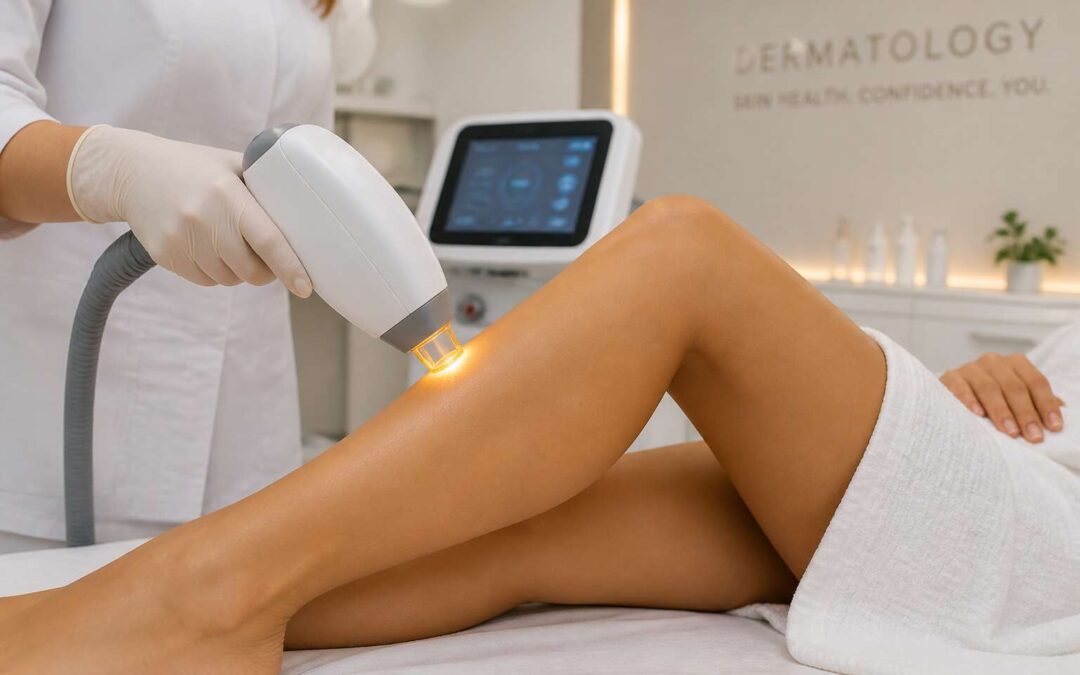
The Fundamentals of Light-Based Hair Removal
In the world of aesthetics, few things are as misunderstood as the technology behind smooth skin. Consider that the term “laser” itself is an acronym for Light Amplification by Stimulated Emission of Radiation. It sounds complex, yet the principle is elegantly simple. We are talking about the fundamentals of light-based hair removal, where targeted energy meets pigment.
The magic lies in a concept called selective photothermolysis. This determines how we speak about treatment, and it is the cornerstone of all laser hair removal terminology. In short, the light seeks out melanin, or the colour, in the hair follicle. The energy converts to heat, disabling the follicle without harming the surrounding skin.
Here is what actually dictates the outcome.
1. Wavelength: The specific colour of light used.
2. Fluence: The energy level delivered.
3. Pulse duration: How long the light is in contact with the skin.
That is the triad that separates a clinical treatment from a mere gadget. In South Africa, with our diverse skin types, this terminology is critical. Practitioners must adjust these variables to ensure safety and efficacy. The light doesn’t just remove hair; it interacts with the biology of your specific skin tone. Understanding this transforms the experience from a mystery into a science.
The Main Types of Lasers and Energy-Based Devices
In South Africa, the demand for smooth skin has transformed laser hair removal into a booming industry. Yet the technology itself remains a mystery to many clients. Understanding the main types of lasers and energy-based devices is your first step toward informed decisions.
The diode laser penetrates deeper, making it a favourite for darker skin tones. The alexandrite laser works faster, ideal for lighter complexions. Then there’s Nd:YAG, which excels in safety for melanin-rich skin. Intense pulsed light, or IPL, is technically not a laser, though often grouped into the same conversation.
– Diode: deep penetration, versatile.
– Alexandrite: quick sessions, fair skin.
– Nd:YAG: gentle on darker tones.
Each device interacts with hair follicles differently. Mastering this laser hair removal terminology helps you choose wisely and set realistic expectations.
Skin, Hair, and Growth Cycle Terminology
Just a few millimetres beneath your skin, a dynamic biological process is constantly at work. Understanding this process is the foundation of the entire lexicon of laser hair removal terminology. Your hair doesn’t just grow continuously; it cycles through distinct stages of activity and rest.
The specific phase where the hair is actively growing and darkly pigmented is called anagen. This is the only time the laser can effectively target the bulb. The other stages are:
- Catagen, the brief transitional phase where growth stops.
- Telogen, the resting phase where the hair sheds.
Because every follicle is at a different point in this cycle, multiple sessions are necessary. This biological timing is why practitioners discuss treatment intervals so frequently. Recognizing these stages is vital to grasping the clinical language used during your consultation.
Treatment Sessions, Sensations, and Side Effects
Mastering laser hair removal terminology starts with understanding what your skin actually goes through. The treatment itself feels like a warm, rubber band snap against the skin. Take a breath. It is quick, and most modern devices include a cooling tip to keep you comfortable. You will hear a faint popping sound with each pulse, which is entirely normal.
You will need several treatment sessions to see lasting results. Hair grows in cycles, and the laser only targets follicles in their active growth phase. Typically, you will return every four to six weeks. The number of visits depends on your hair colour, thickness, and body area.
After each appointment, you may notice some redness or mild swelling. This reaction is temporary. Expect a sensation similar to a light sunburn for a few hours. Side effects are generally minimal and fade quickly, but your technician should always review the full list of laser hair removal terminology related to aftercare with you.