
Pain Perception Factors
Biological Differences in Pain Tolerance
People assume the pain from waxing and laser follows a single scale. In truth, biological differences in pain tolerance skew the entire comparison. Nociceptor density, skin pigmentation, and hormonal cycles alter every pull or pulse. For instance, higher oestrogen levels can sensitise nerve endings, turning a manageable zap into a sharp sting.
- People with pale skin and coarse hair often feel laser as a brief pinch.
- Those with sensitive nerve endings may find wax strips unbearably intense.
Does waxing or laser hair removal hurt more? That depends on your TRPV1 gene variants, which regulate heat perception. Your own nervous system, shaped by past injuries or stress, sets the baseline. This explains why one person’s torture is another’s tickle.
Hair Thickness and Follicle Depth
Hair thickness and follicle depth may decide does waxing or laser hair removal hurt more for you. Thicker hairs require more traction to extract during waxing. The follicle resists, and surrounding nerve endings receive a sharper signal. Those same thick hairs absorb laser energy efficiently, making each pulse feel like a quick snap rather than a prolonged tear.
Deeper follicles demand more penetration from the laser, yet pain stays superficial because heat disperses through tissue. Waxing yanks the entire structure from its root, so the deeper anchor takes longer to release.
- Thick, coarse hair increases waxing pain significantly.
- Deep follicles can make laser sensations feel more internal.
I have seen clients grip the table harder during waxing than during laser! No universal answer exists, only your own hair’s geometry shaping every session.
Skin Sensitivity and Body Area
The upper lip, underarms, and bikini line host dense nerve networks. Laser pulses there feel like a sharp flick. Waxing there feels like a full interrogation. Skin thickness matters. The lip and genitals have thin skin, so both methods hit close to the surface. On calves or forearms, waxing becomes a quick sting and laser barely registers. Body area dictates the real answer to does waxing or laser hair removal hurt more. A practical ranking of pain by region, from worst to mildest:
- Bikini line and Brazilian
- Upper lip and chin
- Underarms
- Legs and arms
The laser’s contact cooling turns each pulse into a fleeting snap. Waxing offers no such mercy, just a countdown and a yank. Clients often flinch harder during waxing, especially near bony spots like the ankles and jawline, where the laser pulse can feel unexpectedly deep.
The Waxing Experience: What to Expect
The Tug and Tear of the Strip
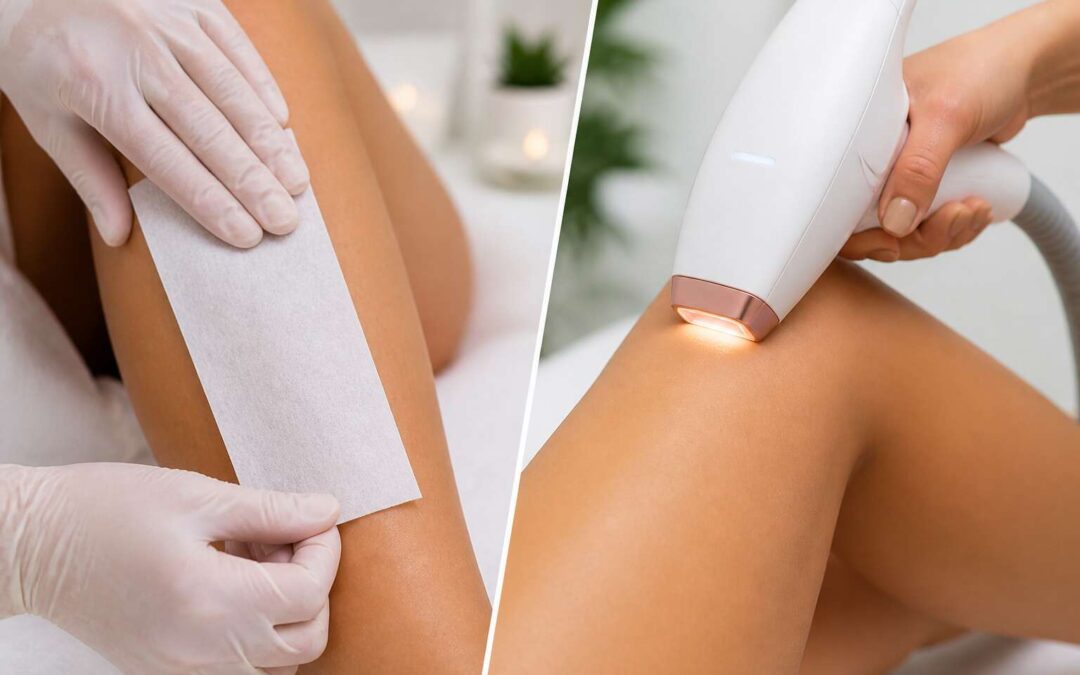
The strip lands with a firm press, and for a heartbeat, the room holds its breath. Then the pull, a tearing sensation that ends in an instant. It does not linger like a burn; it strikes and fades, leaving a flushed trail across the skin.
- The adhesive grips each hair at its root, not the surface.
- The release is instantaneous, a single violent second.
- The aftermath arrives as a surface warmth, not a deep ache.
I have seen clients grip the table and swear they will never return, yet they book again the following week! The true answer to does waxing or laser hair removal hurt more depends on this fleeting violence. With waxing, the pain is a momentary event, loud but quick to leave.
Post-Waxing Inflammation and Redness
The seconds after the strip reveal the true character of waxing discomfort. Post-waxing inflammation begins as a red flush across the treated area. The follicles, abruptly freed from their hairs, swell slightly. Each pore announces itself as a tiny pink dot.
This redness follows a predictable course, peaking within two hours. I often tell clients that the heat they feel is proof the healing process has begun. The treated area remains warm, and the sensation lingers through the afternoon.
- Redness fades within 24 to 48 hours
- The treated area stays tender into the next morning
- Pinpoint bumps often appear before settling
These markers of inflammation are temporary. They do not answer the question of does waxing or laser hair removal hurt more, because waxing delivers its pain in a single sharp moment. The aftermath is visibility, not suffering. Redness signals repair, and repair proceeds on its own schedule.
Frequency of Treatments and Pain Buildup
Waxing establishes its rhythm early. The first session is an unknown quantity. By the third, the body begins to anticipate the pull. This is the peculiar arithmetic of regular waxing: the pain remains, but it diminishes with each cycle.
Frequency dictates the experience. Return every four to six weeks and the hairs grow back finer and weaker. Skip a season and the follicles regain their strength, demanding a more violent extraction. The pattern repeats:
– The second appointment stings less than the first
– The fourth appointment feels like a brief sharp exhale
– A gap of months resets the entire ordeal
When clients ask whether does waxing or laser hair removal hurt more, I explain that waxing punishes inconsistency rather than courage. The buildup is a slow tempering. Each cycle brings pain that is familiar and bearable, and that predictability is the only mercy waxing offers.
Areas That Hurt Most During Waxing
The first pull always announces itself. Waxing is never one continuous ache; it is a series of sharp, discrete events. The heat of the wax softens the skin, the strip tightens, and the release lands as a sudden sting. Clients describe it as a sharp prick or a deep pinch, depending on where the strip sits.
When clients ask whether does waxing or laser hair removal hurt more, I point to a short list:
- The upper lip, thin-skinned and tightly rooted
- The bikini line, where skin folds and follicles grip
- The underarms, where the pull is felt deep in the ribs
The forearms and legs produce a brief, tolerable snap. Many first-timers are surprised that the back of the calf hurts more than the front, or that the ankle bone radiates pain with every pull. The memory of the strip is far shorter than the anticipation.
The Laser Hair Removal Experience: Sensations That Arise
The Snap and Burn of Light Pulses
When the laser head meets your skin, expect a sensation that sits somewhere between a vengeful rubber band and a flick from a hot pan. The machine lets out a dull snap, and for a fraction of a second, your nerve endings register what feels like a tiny burn. It is startling, but quick.
Most clinics pair each pulse with a cooling blast, which softens the overall sting. Still, the experience varies by area and tolerance, so the question of does waxing or laser hair removal hurt more often depends on how you handle sudden heat versus slow pulling.
- The snap is instantaneous, over before you can flinch.
- The burn lingers for a second, then fades to warmth.
- The cooling spray arrives as a relief, not a shock.
Cooling Mechanisms During Procedures
The contrast between the two methods becomes clear in the treatment room. Laser systems have evolved to manage pain through engineered cooling. Contact cooling uses a sapphire tip chilled to low temperatures, pressed firmly against the skin before each pulse. Cryogen spray releases a volatile agent that evaporates instantly, drawing heat from the surface. Dynamic cooling times both systems to prepare the nerve endings.
For many clients, this changes how they answer does waxing or laser hair removal hurt more. The cold numbs the skin before the pulse can register as pain.
- The chilled tip numbs the top layer.
- The spray cools deeper tissue.
- The timing softens each pulse.
The aftermath is equally distinct. No raw, pulled skin. No lingering throbbing. For most, the question of does waxing or laser hair removal hurt more resolves in this moment: the laser leaves you warm, not wounded.
Cumulative Pain Over Multiple Sessions
The laser experience shifts with each appointment. Most clients report the first session feels like a series of sharp flicks across the skin. By the third session, something changes. Hair growth thins, follicles weaken, and the sensation dulls noticeably.
But ask yourself: does waxing or laser hair removal hurt more when you factor in cumulative sessions? Waxing restarts the cycle every month. Laser builds on its own progress. The machine simply wears the hair down until there is less to fight.
The sensations across a full treatment plan follow a pattern:
- Early sessions: quick, sharp pulses that catch you off guard
- Middle sessions: warmth with minimal bite
- Final sessions: barely more than a light touch
There is a catch. Some clients develop tenderness in the hours after treatment. This soreness feels like a mild sunburn confined to the area. It fades within a day or two, unlike the raw aftermath of waxing.
Impact of Skin Tone and Hair Color on Discomfort
The laser does not treat every skin the same. It responds to pigment, to the dark threads that stand out against pale flesh. When hair is black and skin is pale, the light finds its target easily, and the sensation is a sharp, fleeting sting. When the skin carries its own melanin, a deeper bronze or umber, the beam spreads its heat across the surface. The feel becomes a diffuse warmth instead of a sharp pulse. This changes the answer to does waxing or laser hair removal hurt more, because your complexion alters the procedure.
Gray hair, blonde, or red, those pale strands reflect the light rather than absorb it. The follicle barely registers the pulse. The pain dulls to almost nothing, but the treatment loses its power. You trade discomfort for efficacy, with the outcome tied directly to your natural contrast.
Numbing Options and Their Effectiveness
The laser session begins with a hum. The first pulse lands, and a heat spike flares then vanishes in a heartbeat. Most read it as a tiny electric prick. Some areas, like the upper lip, sharpen that sensation. This is when the question does waxing or laser hair removal hurt more turns personal.
Numbing options can reset your expectations. Clinics apply topical anaesthetic creams thirty minutes before the beam starts. The skin goes numb on the surface, but the deeper follicle still registers pressure. Oral painkillers rarely touch that nerve-level snap.
- Topical creams with lidocaine work best on thinner skin, like the bikini line.
- A numbing spray dulls the sting without slowing the session.
- Taking a break between pulses lets the heat disperse before the next strike.
Numbing shifts the experience, yet your threshold decides the final verdict.
Comparing Discomfort: A Side-by-Side Breakdown
Immediate Pain Intensity
On the table, when the wax is ripped away, the body registers a hot, tearing shock that radiates for several seconds. The laser, by contrast, delivers a sharp, electric snap that vanishes almost before the breath escapes. Both sting, but the character of that sting could not be more different. The waxing sensation sits deeper in the tissue. The laser’s pulse stays at the surface.
Immediate pain intensity breaks down like this:
- Waxing: a sudden, wrenching pull that peaks and fades over five to ten seconds.
- Laser: a quick, stinging flick that lasts under a second per pulse.
The difference matters when answering does waxing or laser hair removal hurt more. In the moment of contact, I have seen waxing seize the nerves harder. What strikes me most is how quickly the laser’s pain evaporates! Laser asks for a shorter, sharper burst of pain, but one the skin forgets sooner.
Lingering Soreness After Appointments
Comparing the two side by side, the immediate exchange of pain is only one part. Waxing leaves a raw, tender surface that throbs for hours, especially where hair was dense. Laser discomfort is a diffuse warmth that settles within the day. Neither demands bed rest, but waxing keeps reminding you it happened.
Lingering soreness after appointments follows a distinct pattern:
- Waxing: sensitivity peaks at two to six hours, then fades over 24 to 48 hours.
- Laser: warmth and tenderness usually calm within a few hours, with occasional lingering sensitivity for a day.
That timeline matters when answering does waxing or laser hair removal hurt more, because the pain you remember is the pain that stays.
Long-Term Comfort and Hair Reduction Benefits
Comparing discomfort side by side means looking past the first session. Waxing is a sharp, tearing event. Laser is a series of quick snaps. The real difference emerges over months. Laser reduces hair growth, so each session targets thinner, sparser hair. That means less energy and less discomfort. Waxing demands the same force every time because hair grows back fully.
Long-term comfort shifts the answer. Laser pain decreases with each visit. Waxing stays constant. Here is what matters:
- Laser discomfort drops as follicles weaken.
- Waxing remains a full-strength pull each cycle.
- Laser leaves no raw surface, just transient warmth.
- Waxing triggers ingrown hairs that add their own ache.
When weighing does waxing or laser hair removal hurt more, the cumulative picture favors laser. The first appointment stings, but the fourth becomes tolerable. Waxing never offers that relief. Hair reduction benefits feed directly into comfort, making laser the quieter choice over time.