
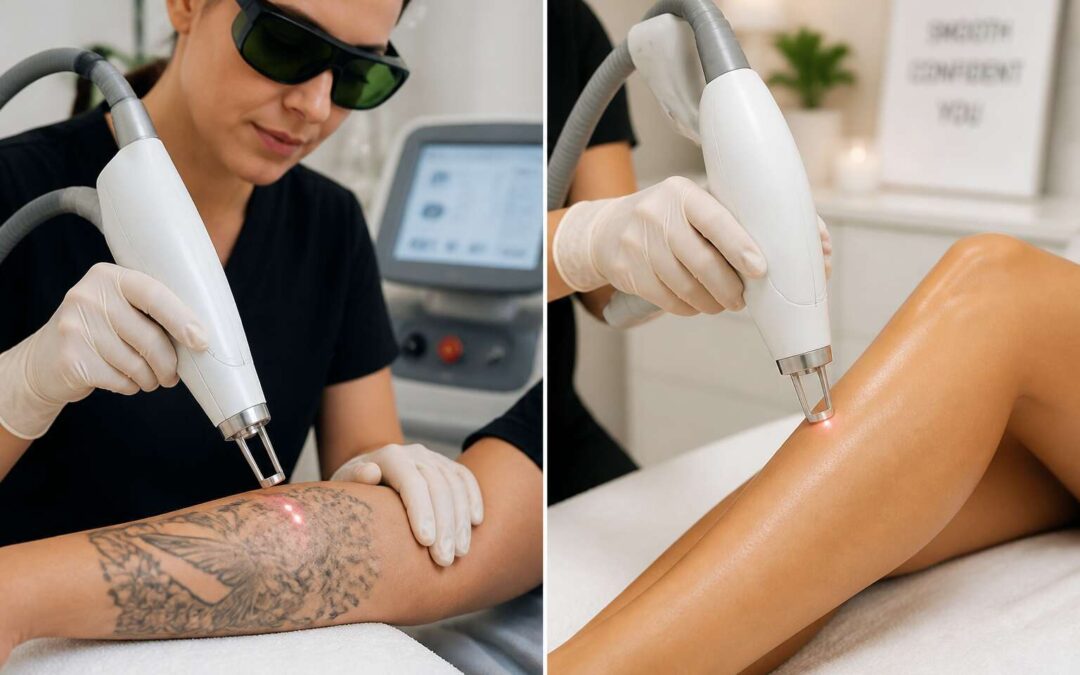
Understanding the Core Differences
How Tattoo Removal Works
Tattoo removal vs laser hair removal may both involve lasers, but the two share about as much in common as a drill sergeant and a masseuse. Laser hair removal targets melanin in the follicle to halt growth. Tattoo removal works in reverse: it fires pulses into the dermis to shatter trapped ink into fragments your lymphatic system then flushes away.
This core distinction shapes everything for anyone weighing tattoo removal vs laser hair removal. Hair removal destroys a structure. Tattoo removal dismantles a foreign substance. A few variables determine the effort required:
- Ink colour dictates the laser wavelength, with black absorbing most efficiently.
- Ink depth and density drive the number of sessions.
- Older tattoos often fade quicker than recent ones.
The process is more demolition than grooming. The laser must shatter the pigment while leaving the surrounding skin untouched, which is why calibration matters more than raw power.
How Hair Reduction Works
Laser hair removal is a process of controlled interruption. The laser seeks melanin within the hair follicle, converting light into heat that disables the follicle’s ability to regenerate. Unlike tattoo removal, which fractures pigment in the dermis, hair reduction targets a structure that is alive and cyclical.
- Hair pigment drives the absorption rate, with dark hairs responding best.
- Skin tone influences safety, as the laser must ignore surrounding melanin.
- Hormonal changes can revive dormant follicles, requiring maintenance sessions.
This is why tattoo removal vs laser hair removal demands a completely different mindset. Tattoo removal is demolition. Hair reduction is management. One aims for total clearance, the other for lasting suppression.
Fundamental Treatment Goals
Two lasers can share a wavelength and still do opposite work. Tattoo removal vs laser hair removal is a comparison of intentions, not machines. Tattoo ink is foreign material. The body does not need it, and the laser’s job is to eradicate it. Hair is a living structure your body is designed to regrow. The goal is not total destruction but dominant suppression.
These opposing end goals change how sessions are measured. Tattoo clearance is judged by how much pigment has faded. Hair reduction is judged by how long before regrowth appears. The treatment targets are not the same:
- Tattoo removal: permanent removal of a single object.
- Laser hair removal: long-term management of a recurring process.
This is why tattoo removal vs laser hair removal demands different expectations. One procedure wants elimination. The other wants control.
Biological Response and Skin Interaction
Melanin and Ink Targeting
Melanin guides how laser energy is absorbed during tattoo removal vs laser hair removal, but the biological response diverges sharply. In hair reduction, the laser seeks melanin inside the follicle, heating it to disrupt growth. For tattoo ink, the target is extracellular pigment, not living tissue.
Skin interaction differs because ink sits in the dermis while hair roots extend deeper. The laser must fragment ink particles without overheating surrounding collagen. Melanin in the skin competes for absorption, so lighter skin tones allow safer ink targeting.
- Hair reduction requires melanin in the follicle
- Tattoo removal requires ink particles to shatter
The immune system then clears the debris, a process that depends on particle size and location.
Hair Follicle Destruction
One degree can decide whether a hair dies or survives! In the confined space of a follicle, the laser’s heat must be precise. The biological response to this thermal injury is swift. The germinative cells in the bulb denature, and the stem cells in the bulge, the critical reservoir of regrowth, are destroyed. Without them, the follicle collapses.
The skin reacts with a controlled inflammatory reaction. Macrophages consume the debris, while fibroblasts begin their repair work. This is the crux of tattoo removal vs laser hair removal. Hair reduction aims for thermal coagulation of the follicle, a destructive process that leaves no living tissue behind.
We see this skin interaction clearly in practice. In tattoo removal, the laser passes through the dermis to reach pigment. In hair reduction, the energy concentrates on the hair shaft and root. In South Africa, where skin tones range widely, the leeway is tiny. A misdirected pulse can spare the follicle or damage the surrounding tissue.
Recovery and Healing Processes
Recovery is where tattoo removal vs laser hair removal diverges sharply. After tattoo removal, the skin weeps and crusts as it expels shattered ink particles. This process can last up to three weeks, and hyperpigmentation is common for darker South African skin types. Laser hair reduction, by contrast, produces only transient redness and mild swelling, often settling within a day.
The healing cascade differs because the targets differ. Tattoo removal triggers an immune response that must clear foreign pigment. Hair reduction leaves a collapsed follicle that the body absorbs quietly. Here is what patients typically notice:
- Tattoo removal: scabbing, blistering, and prolonged sensitivity.
- Laser hair reduction: pinpoint swelling and minimal downtime.
In our climate, sun exposure complicates both. Proper aftercare protects the barrier, but the contrast in recovery time remains significant. Understanding this contrast is central to choosing between procedures, and downtime shapes daily life!
Potential Side Effects
The biological response to each procedure shows how differently the skin copes. Tattoo removal vs laser hair removal comes down to how deep the disruption travels. Tattoo lasers bombard pigment lodged in the dermis, so the skin reacts with a cellular cleanup that can disturb surrounding collagen. The result is possible textural change, sometimes permanent. Hair reduction targets the follicle and its blood supply, leaving the upper layers mostly untouched.
Potential side effects reflect this contrast. On darker South African skin, tattoo removal carries a real risk of pigment loss and scarring. Laser hair reduction tends to produce temporary folliculitis and mild pigment shifts, but rarely permanent damage. The discomfort differs too:
- Tattoo removal: a prickling heat that lingers for hours.
- Hair reduction: a brief sting that fades within minutes.
Each response traces a different path through the skin’s layers.
Candidate Suitability and Skin Types
Skin Tone Considerations
The question of who may safely lie beneath the laser’s eye is not a simple one. Tattoo removal vs laser hair removal attract different candidates, though both procedures share a common constraint: skin tone. In South Africa, where the sun paints a wide spectrum of complexions, this matters deeply.
Darker skin holds more melanin, which competes with the target. For tattoo removal, this can mean stubborn ink surviving additional sessions. For hair reduction, it raises the spectre of burns or pigment changes. Your specific Fitzpatrick type, from pale ivory to deep ebony, guides the practitioner’s settings.
- Fitzpatrick type IV to VI requires lower energy settings.
- Previous sun exposure modifies the risk profile.
- Underlying conditions like keloid scarring alter outcomes.
Each candidate’s history whispers its own warnings. The laser does not discriminate by intention; it responds to physics alone. Ultimately, the suitability of tattoo removal vs laser hair removal rests on these measured details.
Hair Color and Texture
Let me be plain. Your suitability for tattoo removal vs laser hair removal appears in your hair. Laser hair removal depends on the contrast between hair and skin. Dark, coarse hair absorbs the light. Blonde or grey hair carries too little pigment, so the laser slips past it. Many candidates never achieve meaningful reduction.
For tattoo removal, the situation differs. Ink sits deeper than hair, and the target is fixed. Hair colour and texture barely matter. Deciding factors are ink age, colour, and immune response. You compare pigment in the skin, as in tattoo removal, against pigment that grows from it, as in laser hair removal.
- Thick, dark hair on pale skin responds best to laser hair removal.
- Fine, light hair will frustrate the procedure and your patience.
- Tattoo ink answers to wavelength alone.
Skin type and hair texture decide which procedure offers a clean outcome.
Tattoo Size and Color Palette
Skin type plays a different game in tattoo removal vs laser hair removal. Hair reduction wants that high contrast of pale skin and dark follicles. Tattoo removal, however, weighs your skin’s tendency to scar or hyperpigment. The clinic should test a small patch first, especially if you have darker skin or a history of keloids.
Tattoo size and color palette set the session count. A massive sleeve takes years. A tiny line tattoo might vanish in a few visits. Ink color matters more than people expect:
- Black and dark blue break down fastest.
- Green and turquoise resist stubbornly.
- Yellow and white sometimes refuse to budge.
Your immune response and the ink’s age shape the final outcome more than any laser setting.
Pre-Existing Skin Conditions
Some people arrive for tattoo removal vs laser hair removal carrying a dermatologist’s chart. Pre-existing skin conditions, from eczema to vitiligo, alter the decisions entirely. For hair reduction, active inflammation can turn a simple zap into a flare-up. For tattoo removal, a history of keloids means the laser might remove ink but leave a raised scar. Here is the candid list:
- Psoriasis: both procedures risk triggering new plaques.
- Cold sores: laser near the mouth can provoke an outbreak.
- Rosacea: hair removal on the face may worsen redness.
Your skin’s current state dictates who gets the approval. Clinics in South Africa often refuse treatment during active breakouts, because healing becomes unpredictable. Candidate suitability measures your skin’s temper, not your pain tolerance.
Lifestyle and Commitment Factors
Candidate suitability in South Africa hinges on your daily habits as much as your dermis. I have seen patients commit to tattoo removal vs laser hair removal with enthusiasm, then cancel because their beach holiday arrives! Sun exposure undoes progress rapidly. Your Fitzpatrick type decides the laser settings, but your sun discipline decides the outcome.
Lifestyle factors shape the timeline. Outdoor workers, swimmers, and holiday planners face different scheduling demands than office professionals.
- Tattoo removal sessions sit six to eight weeks apart, often stretching beyond a year.
- Laser hair removal demands top-ups every four to six weeks for up to ten sessions.
- Each visit requires strict sun avoidance and planned downtime.
If you cannot protect treated skin for weeks, candidacy narrows. Clinics assess your routine alongside your skin.
Cost, Downtime, and Treatment Frequency
Session Pricing Variances
Cost, downtime, and treatment frequency reveal stark contrasts in tattoo removal vs laser hair removal. Tattoo removal sessions demand a higher price per visit, since breaking pigment requires more energy. Hair reduction often costs less per session, but the overall expense depends on body area. Downtime for tattoo removal includes scabbing and swelling for several days. Laser hair removal typically causes transient redness that fades within hours.
Treatment frequency also varies. Tattoo ink usually needs six to twelve spaced appointments. Hair removal follows a strict schedule every four to eight weeks. Session pricing varies by clinic expertise and laser model. Here is a quick reference:
- Tattoo removal: expensive per session, longer intervals, extended healing
- Laser hair removal: moderate per session, regular intervals, minimal recovery
Urban centres like Cape Town often charge more than rural practices. Ultimately, your budget for tattoo removal vs laser hair removal depends on maintenance and downtime.
Number of Sessions Required
Tattoo removal vs laser hair removal looks straightforward on a price list, but the true expense hinges on session counts. Tattoo ink generally needs eight to twelve visits with gaps of several weeks, while hair reduction runs six to eight sessions on a stricter four to six week rhythm. Those numbers shift with skin type, ink density, and hair thickness.
Downtime tells a different story. Tattoo removal leaves scabbing and swelling for days, sometimes a full week. Laser hair removal recovery is barely noticeable; redness fades within hours and you resume normal activity immediately.
- Tattoo removal: 6 to 12 sessions, longer gaps, extended healing
- Laser hair removal: 6 to 8 sessions, strict gaps, minimal recovery
South African clinics in Johannesburg and Cape Town charge more per tattoo removal session because breaking pigment demands higher laser energy. Hair removal sessions appear cheaper, but treating both legs or a full back adds up quickly. When weighing tattoo removal vs laser hair removal, budget for the total number of sessions, not the advertised single-visit rate.
Pain Perception and Comfort
The true cost of tattoo removal vs laser hair removal goes beyond the quoted rate. In Cape Town, a tattoo removal session can leave you with a bill of R1,200 and a week of crusted skin. Laser hair removal costs less per visit, but the real advantage appears in recovery. You walk out with mild redness that fades before supper.
Pain perception differs just as much. Tattoo removal produces a stinging, burning sensation. Laser hair removal produces short, mild pricks that end quickly. For most clients, comfort favors hair removal distinctly.
Recovery Time Comparison
Costs stack unevenly across these procedures. Tattoo removal in Cape Town averages R1,200 per session, with larger pieces requiring double that. Laser hair removal prices per zone, so a small area costs less than a single tattoo session. The cumulative total for tattoo removal vs laser hair removal depends entirely on ink density and hair growth cycles.
Downtime follows a similar divide. Tattoo removal leaves the skin crusted for up to a week. Laser hair removal clients rarely need to plan around the procedure.
Treatment frequency separates them further:
- Tattoo removal sessions space four to eight weeks apart, letting the immune system clear fragmented ink.
- Laser hair removal sessions space four to ten weeks apart, aligning with anagen growth phases.
Recovery time separates the two options in tattoo removal vs laser hair removal. Each hair removal visit heals within hours, while tattoo removal invites a week of careful aftercare.
Long-Term Results
The real test lies in the final outcome. Cost structures only make sense when measured against end results. Tattoo removal pricing ends when the ink is gone. Laser hair removal pricing ends when follicles stop producing, though some clients book maintenance sessions for stragglers.
Downtime stacks differently. Laser hair removal allows same-day return to routine. Tattoo removal demands bandaging, scabbing, and sun avoidance for days. Multiply that across the full session count and the gap widens.
Treatment frequency holds steady through both journeys:
- Tattoo removal waits four to eight weeks for immune clearance of ink.
- Laser hair removal waits four to ten weeks for anagen phase regrowth.
The long-term difference defines which investment pays off. Ink eventually fades completely, while hair reduction settles into a lighter, thinner pattern. Tattoo removal vs laser hair removal both reward patience, but they deliver different definitions of done.
Maintenance and Touch-Ups
Cost comparisons for tattoo removal vs laser hair removal mislead initially. A single hair removal session may cost less, but session counts and maintenance schedules differ. Tattoo removal concludes when the ink clears, with no ongoing obligation. Laser hair removal settles into a maintenance phase for stragglers, so the final invoice depends on your follicles.
Downtime differs. After hair removal, you can return to your day immediately. Tattoo removal sessions require bandaging, scabbing, and sun avoidance for days, which adds costs in time and discomfort.
Treatment frequency dictates your calendar. Tattoo removal waits four to eight weeks for immune clearance. Hair removal waits four to ten weeks for regrowth. Maintenance patterns differ too:
- Tattoo touch-ups are rare and usually linked to stubborn pigment.
- Hair maintenance sessions are often scheduled annually or biannually.
Only the full timeline reveals the cost of tattoo removal vs laser hair removal!
Choosing the Right Professional and Consultation
Credentials and Certification
The most advanced laser cannot compensate for inadequate training. Your outcome rests on the person operating the device, not the machine alone. In South Africa, laser treatments fall under regulated oversight, so confirm your provider holds current registration with a recognised health authority.
During consultation, a reliable practitioner will examine your skin closely. They should ask about sun exposure, recent tanning, and photosensitising medication. When assessing tattoo removal vs laser hair removal, the same scrutiny applies. Expect transparent discussion about fluence settings, cooling methods, and realistic timelines. I have seen too many clients chase discounted packages without checking who holds the handpiece.
Credentials worth verifying:
- HPCSA registration or nursing council enrolment
- Certification from the specific laser manufacturer
- Professional indemnity insurance
- A documented portfolio of previous cases
Test Patch Strategies
The consultation is your best opportunity to scrutinize the person holding the laser. A practitioner who rushes through your skin history should make you pause. When weighing tattoo removal vs laser hair removal, the test patch offers the evidence you need.
It reveals how your skin reacts under real conditions, before you commit to a full session. I always insist on one. The process should feel clinical, not casual. The operator must document the settings, wait an appropriate timeframe, and show you the results. Skipping this step is a warning sign. I have yet to meet a patient who regretted a test patch, but plenty who regretted skipping one.
In South Africa, a proper test patch costs a fraction of the full treatment, and it spares you from unexpected pigmentation shifts or disappointing clearance. It is the final safeguard before payment.
Building a Customized Plan
A consultation is a dialogue, not a monologue. I have observed hundreds of them across South African clinics. The most revealing detail is not what the practitioner tells you, but what they ask. In tattoo removal vs laser hair removal, those questions diverge sharply. Tattoo work probes ink depth, color saturation, and past healing. Hair removal digs into hormonal shifts, recent pregnancies, and shaving habits.
Bring details! A thorough consultation requests:
- Photographs of the tattoo when it was fresh
- A record of past hair removal methods
- A list of current supplements
The customized plan emerges from these specifics. It accounts for your tolerance, your budget, and the season. A skilled professional adjusts settings and intervals accordingly.
If you leave with more questions than answers, the consultation has failed its purpose. The right practitioner treats your skin like their reputation depends on it, because it does.