
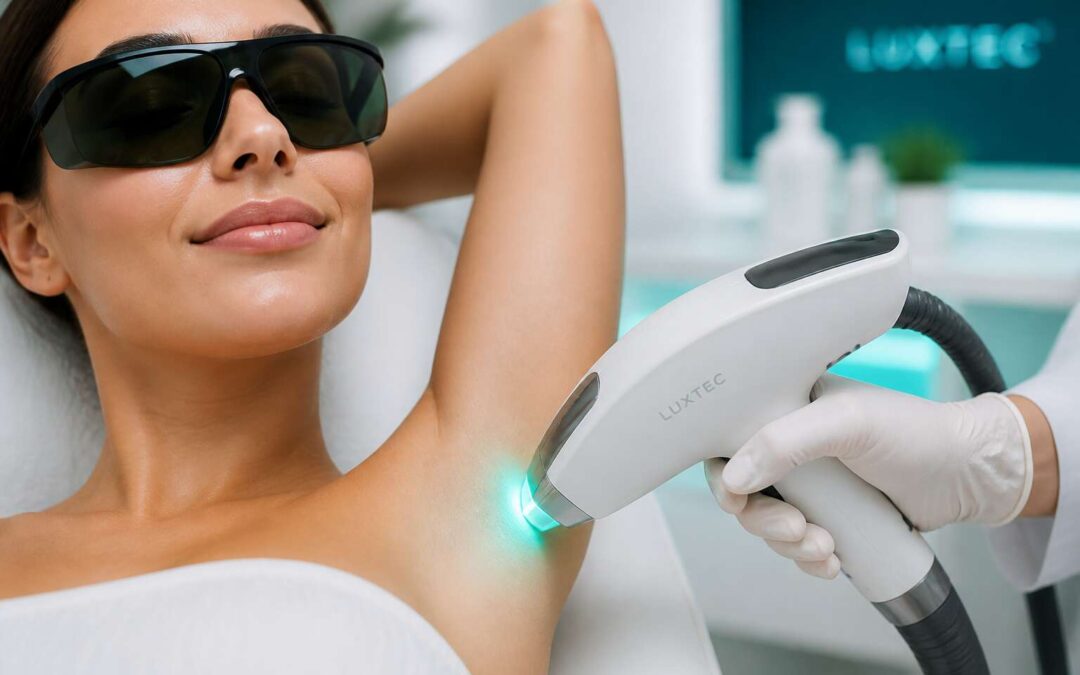
What Does Level 8 Refer To?
The Laser Intensity Scale Explained
Laser hair removal level 8 sounds technical, but the number matters. It sits near the top of the intensity scale, where energy shifts from temporary reduction to permanent clearance. Most South African clinics reserve this setting for coarse, deeply pigmented hair.
Level 8 is not a universal standard. Different machines assign their own numerical values, so a level 8 on one device may feel different on another. The number reflects pulse duration, spot size, and joules per square centimetre.
Here is what level 8 means in practice:
- Higher melanin absorption, targeting dark hair roots with precision.
- Greater thermal damage to the dermal papilla, reducing regrowth.
- Increased discomfort, which is why numbing agents are often applied beforehand.
Clinicians assess skin type before using this setting, because the energy that clears thick follicles can risk hyperpigmentation on darker skin. A consultation precedes every calibration, ensuring the intensity matches both hair and skin.
Why Level 8 Is Considered High on the Spectrum
At the top of a laser’s range sits laser hair removal level 8. It refers to a calibration that combines pulse duration, spot size, and energy density for one purpose: permanent damage to the hair root. The number is not universal. Each machine assigns its own values. Yet on any device, it means the same thing: the output is near maximum.
Why level 8 is considered high on the spectrum is simple. It lives close to the maximum safe output. The energy delivered is enough to destroy the dermal papilla, but going higher risks burning the skin. South African clinicians rarely choose laser hair removal level 8 for anything but coarse, dark hair on pale skin. The margin for error is narrow. In practice, level 8 involves:
- Pulse durations shortened to fractions of a second.
- Focused spot sizes that target deep follicles.
- Energy values at the upper register of the device.
A single misstep can leave a scar. Handled correctly, it clears what lower settings cannot.
How Clinicians Determine the Ideal Level for You
Level 8, on most devices, refers to the machine’s maximum effective fluence, the energy per square centimetre that reaches the follicle. It is not a universal number. One clinic’s laser hair removal level 8 may be another’s level 6, which is precisely why South African technicians treat the label with suspicion. The calibration bundles three variables: pulse duration, spot size, and energy density, all tuned for one outcome.
How do clinicians determine the ideal level for you? They run a patch test, usually on a small area near the jaw or ankle. They observe the skin’s reaction over fifteen minutes. They ask about your tanning history, your medications, and your pain tolerance. Then they adjust.
- Coarse, dark hair on pale skin often tolerates level 8.
- Fine or light hair rarely needs it.
- Darker skin requires a lower energy to avoid pigment damage.
The clinician also watches for immediate erythema, which is pinkness that fades within an hour. If that happens, the dose is right. If the skin blanches, they step down to a safer setting, because laser hair removal level 8 demands respect.
Preparing for a High-Intensity Session
Skin and Hair Criteria for Candidacy
The room feels different when the machine is set to 8. I have watched clients leave sessions pale, not from pain, but from the realization that their skin accepted a force many cannot tolerate. Before you move toward that handpiece, your clinician evaluates two things: your skin’s phototype and your hair’s calibre. These are non-negotiable filters for laser hair removal level 8.
The ideal candidate has pale skin and thick, dark hair. Contrast between hair and skin allows the laser to lock onto the follicle’s melanin while leaving the epidermis unharmed. If your skin is darker or your hair is fine, the energy scatters. For laser hair removal level 8, scattered energy means burns instead of results. A patch test, performed four weeks ahead, reveals whether your body can cooperate with this intensity.
Preparation carries the same weight. South Africa’s UV index is brutal, and sun exposure within six weeks voids your session outright.
Your pre-treatment discipline follows a strict checklist:
– Shave the area 24 hours before, never wax or pluck
– Stop retinoids and chemical exfoliants five days prior
– Avoid direct sunlight entirely; wear SPF 50 even indoors
– Disclose all medications, especially photosensitising ones
You cannot walk in unprepared for pain either. The sensation at this level shifts from a rubber band snap to a sharp, focused heat that vanishes in seconds. Redness and swelling are standard outcomes. Blistering signals a mismatch between setting and skin. Trust the clinician’s call and arrive with clean, bare skin ready to absorb the full force of laser hair removal level 8.
Pre-Treatment Guidelines to Follow
Arriving at a laser hair removal level 8 session without preparation is an act of negligence. The machine reads your skin exactly as it is, not as you wish it to be.
Every choice you make in the seven days prior alters that reading. Alcohol thins the blood and increases inflammation. Caffeine sharpens nerve endings. Sleeping pills dull your body’s ability to recover. Your clinician may not ask about these things, but your skin will show the evidence regardless.
The preparation is simple, although not easy. Follow the sequence without improvisation:
- Hydrate deeply for three days straight
- Keep the area shaved 24 hours before the appointment
- Wash with plain soap, no fragrance, no actives
Notice how quiet this discipline is. No grand gestures. Only the slow, patient work of making your body a reliable surface for laser hair removal level 8.
What to Avoid in the Days Before Your Appointment
Some patients treat the days before a laser hair removal level 8 session like a casual warm-up. They are mistaken. The interval between booking and burning is a physiological minefield. Your skin is not a passive canvas; it is an active organ with opinions, grudges, and a remarkable memory for every coffee you drank while stressed.
The primary offenders are deceptively mundane. Retinoids, for instance, are fantastic for evening out tone until they make your epidermis translucent right before a high-energy blast. Similarly, any form of chemical exfoliant is a direct act of sabotage. The laser does not differentiate between a gentle slough and a raw, freshly exposed dermis; it simply reacts with thermal violence.
Consider the inflammatory agents hiding in plain sight:
- Anti-inflammatory medications like ibuprofen, which paradoxically increase the risk of bruising.
- Spicy foods, which raise core body temperature and skin sensitivity.
- Chlorinated water from that quick swim, which alters the skin’s surface minerals.
The sun is another silent player. A week of “light” sun exposure without burning still triggers melanin production. The laser sees this residual pigment and redirects energy toward it, away from the follicle. The result is a session that hurts more and delivers less.
Ultimately, preparation is a study in subtraction. Remove the variables that confuse the machine. A clean, dry, chemically unremarkable surface is what allows the laser hair removal level 8 to target its true objective: the root, not the reaction.
Managing Pain Expectations and Numbing Options
No one walks into a laser hair removal level 8 session indifferent. Anticipation often outruns the actual sting, yet that awareness seldom quiets the dread. Pain perception varies with nerve endings and personal history. Some patients describe the pulse as intense and localized. Others find it manageable. What matters is honest expectation: level 8 demands respect.
Numbing options transform the experience. Topical anaesthetics, applied under occlusion, create a window of diminished sensation. The cream needs time to penetrate the follicle. Ice packs numb the surface but not the root. A handpiece with contact cooling delivers a cold blast before each pulse. Your clinician may recommend a specific protocol based on your pain tolerance.
Discuss these options before treatment:
- Prescription-strength numbing cream
- Cooling device adjustments
- Short-acting oral analgesics, excluding anti-inflammatories
Each choice alters the calculus of discomfort. The goal is not to erase sensation, but to make it surmountable.
What to Wear and Bring on the Day
Walking into a laser hair removal level 8 session demands preparation beyond courage. What you wear on the day shapes your immediate comfort. Choose loose, breathable fabrics that glide over the treatment zone. Compression garments or tight waistbands will aggravate the skin once the heat settles.
Bring only what simplifies the exit. A soft cotton shirt or seamless shorts work for most zones. Skip jewellery and metal accessories near the treated area. Pack a cold water bottle and a light snack, as your body may feel depleted!
- Loose, button-up top or elastic waist pants
- Change of clothes in case of sweat or gel residue
- Minimal personal items, just your ID and payment method
The goal is an easy transition from the laser bed to your car, without friction against the skin.
The Procedure: What to Expect During Treatment
Laser Technologies That Deliver High Energy Levels
A laser hair removal level 8 session unfolds in hushed efficiency. Goggles go on, the clinician calibrates the handpiece, and I find myself debating the etiquette of holding perfectly still. The first pulse arrives as a warm snap, startlingly brief. You smell singed hair, which is the odour of progress.
The technologies that deliver these high energy levels deserve their reputation. Diode lasers penetrate deeply, Nd:YAG systems suit melanin-rich skin, and alexandrite lasers work quickly. Your clinician selects the device based on your hair colour and skin type.
What happens during treatment follows a quiet rhythm:
- Numbing cream, if applied, takes twenty minutes to activate
- Each pulse targets an individual follicle, moving in a grid pattern
- A cooling burst follows every flash to shield the upper dermis
The entire process ends sooner than expected. You leave with mildly flushed skin and a follow-up appointment. Laser hair removal level 8 feels intense, yet the session itself passes in minutes.
Sensations You Might Feel and How to Cope
At laser hair removal level 8, the pulse arrives with a heat that flares and vanishes in one breath. Some call it a sting. Others describe a snapping sensation. The cooling burst immediately following offers temporary relief.
Coping techniques vary by person:
- Time your breathing with the pulses.
- Count down the remaining zones with the clinician.
- Request a lower pressure if a spot feels unbearable.
The rhythm settles quickly. Bodies adapt to the burning succession, and the session ends before anxiety takes hold.
Typical Session Duration and Treatment Areas
The procedure itself holds a strange elegance. You lie still while the clinician works through the mapped area with deliberate focus. For laser hair removal level 8, the session length scales with the canvas.
Small commitments like the upper lip pass in moments. An entire back requires patience; expect twenty to thirty minutes.
The most requested areas remain:
- Bikini line and Brazilian patterns
- Underarms and lower legs
- The full face or neck
What strikes me most is the cadence. The handpiece glides, stops, pulses, then moves again. The integrated sapphire tip presses against the skin, protecting the surface while energy targets the follicle below. Clinicians photograph the treated zone after each pass, noting how the hair responds. Visits repeat every four to six weeks to catch newly active growth cycles.
How Your Provider Adjusts Settings in Real-Time
The treatment room operates with precision. The clinician reads subtle signals from your skin. A slight flush, a change in tissue texture, or how follicles respond to each pulse informs the next move. Laser hair removal level 8 depends on this continuous exchange between provider and tissue.
Each zone presents its own variables. The nape of the neck may need different calibration than the shin. Within a single pass, the clinician might reduce energy over bony prominences or increase it where follicle density is higher. They watch for immediate whitening of the follicle, then adjust the next pulse.
The provider fine-tunes several elements in real time:
- Fluence, or the energy delivered per pulse
- Pulse duration, matched to the hair shaft’s thickness
- Cooling levels, protecting the epidermis between pulses
Your verbal cues matter too. If a spot feels sharper, say so. I’ve watched providers recalibrate laser hair removal level 8 mid-session based on a single word from you.
Aftercare and Recovery for Intense Treatments
Immediate Post-Treatment Skin Reactions
The skin’s response to laser hair removal level 8 can be visually dramatic, which often surprises first time clients. Within minutes, the treated area will exhibit erythema, a pronounced redness that mimics a significant sunburn, alongside perifollicular edema. You might notice raised bumps around each hair follicle, a reaction known as urticaria. This appearance is entirely standard and serves as visual proof that the high energy successfully targeted the dermal structures. For many, the intensity of this flush peaks several hours post session, making the initial recovery phase a test of patience.
– The treated skin often feels warm to the touch for up to six hours.
– A prickling or stinging sensation is common for the first day.
– Swelling around the follicles typically subsides within 48 hours.
This inflammatory response is the body’s natural healing cascade, acting on the trauma induced by the deep thermal penetration. While the discomfort is generally manageable, it signals that the skin barrier is temporarily compromised. Avoiding any additional heat sources, such as hot showers or steam rooms, is crucial during the first 48 hours. The area is hyper-sensitive, and introducing external stressors can prolong the recovery window. You must resist the urge to cool the area with ice directly; instead, use a cold compress or aloe vera gel to soothe the heat without shocking the tissue. The skin is recalibrating itself, and allowing this process to unfold undisturbed is the most effective way to ensure optimal results from your laser hair removal level 8 session.
Recommended Skincare Routines and Products
Your skin just went through a thermal event. The heat from the session has faded, but the barrier remains fragile. For laser hair removal level 8, avoid any harsh chemicals in your skincare routine. Wash with lukewarm water and a mild cleanser. Apply a barrier-repair moisturiser containing ceramides or zinc oxide. Keep the area hydrated throughout the day.
A minimal protocol works best:
- Cleanse with a sulphate-free, fragrance-free gel.
- Pat dry, never rub.
- Layer on an aloe vera gel with no added alcohol.
- Finish with a broad-spectrum SPF 50 if exposed.
The recovery after laser hair removal level 8 relies on patience and restraint. Resist exfoliating or using active serums for at least five days. Let the oedema fade and the redness settle. Your clinician may recommend a hydrocortisone cream, but only use it as prescribed. Give your skin uncomplicated support and it will produce smoother results.
Activities to Limit or Avoid for 24-48 Hours
The first 48 hours after laser hair removal level 8 demand restraint. Your skin has absorbed a deliberate shock, and it needs quiet to settle. Skip the gym, the spin class, and any workout that leaves you drenched. Sweat irritates the treated follicles and can invite bacterial mischief. Likewise, postpone hot yoga or a long soak in a steaming bath. Heat reopens the very channels your clinician just sealed.
Think of these two days as a period of careful monitoring. Keep the area cool and undisturbed. Avoid these common temptations:
- Strenuous exercise that triggers heavy sweating.
- Saunas, steam rooms, and hot baths.
- Swimming in pools or the ocean, where bacteria lurk.
- Direct sun exposure without protective clothing.
Let the skin rest. The less you demand of it, the faster it returns to normal.
Signs of a Positive Treatment Response
By the third day, the skin begins to reveal its true response. The initial flush recedes, and any pinpoint swelling settles. This transition marks the start of measurable recovery!
For a laser hair removal level 8 treatment, the absence of crusting or persistent irritation indicates that the epidermis tolerated the thermal load. You might notice hair appearing stunted or curled before shedding naturally.
- Redness that fades progressively over 72 hours
- No blistering or open sores
- Hair follicles releasing without discomfort
These signs confirm that the high energy reached its target while allowing your skin to repair. Each week, treated areas feel smoother. The real validation comes during your follow-up appointment, when your clinician measures the reduction in hair density.
Red Flags That Require Medical Attention
Your skin’s voice is unmistakable after a laser hair removal level 8 session. The first 48 hours demand gentleness. Keep the treated zone clean with lukewarm water and a mild cleanser. Resist the urge to scrub or exfoliate. Let the skin flake off at its own pace. Applying a thin layer of fragrance-free moisturizer helps, but only after you confirm no open areas exist.
Watch for these warning signals that call for a medical consult:
- Swelling that spreads beyond the treated patch
- Fluid filled blisters that grow
- Heat radiating from the skin after day two
Laser hair removal level 8 pushes energy deep, so your epidermis works hard to regenerate. A little pinkness persists, that is normal. However, severe pain or discharge means the thermal load overwhelmed your defenses. Do not wait it out. Your provider needs to assess whether a cooling protocol or topical medication is necessary. Trust your instincts. Recovery is not a competition.
When to Schedule Your Next Session
Recovery from laser hair removal level 8 follows a predictable curve. By day three, treated follicles enter a resting phase. The skin feels warm or itchy, but the sensation fades as the epidermal barrier rebuilds. Most resume grooming within five days; sun avoidance remains critical.
The interval between sessions matters as much as the energy delivered. Hair grows in cycles, and only active anagen follicles respond. For laser hair removal level 8, we schedule the next appointment at four to six weeks. Facial hair regrows faster, so shorter intervals suit the upper lip or chin. Body areas require a longer wait.
Consider these signs when booking your follow-up:
- Residual redness that has fully settled
- Visible shedding of treated hairs within ten to fourteen days
- An unbroken surface without pigmentation shifts
Scheduling too early wastes the treatment’s potential. Too late lets dormant follicles regain strength. Trust your clinician’s timeline. Consistency drives long term results!
Potential Risks and How to Minimize Them
Common Side Effects and Their Duration
Potential risks with laser hair removal level 8 are rare but real. Hyperpigmentation, blistering, and follicle damage can occur when high energy meets melanin. The risk increases for deeper skin tones or recent tans. Minimization relies on honest disclosure of your medical history and strict compliance with the preparation rules your clinician provides.
Common side effects appear in nearly every session, though their duration varies:
- Redness and swelling around treated follicles usually subside within 24 to 48 hours.
- Temporary crusting may last up to seven days.
- Mild pigment shifts, either darkening or lightening, can take several weeks to resolve.
In our practice, these responses are the skin’s way of processing thermal shock. They do not indicate a faulty treatment. Recovery tracking during the follow-up visit helps us separate a routine reaction from one that needs attention.
Rare Complications You Should Know About
Most dermatologists will tell you that severe complications from laser hair removal level 8 occur in less than one percent of cases. That one percent, however, spends an uncomfortable week explaining why their arm resembles a burnt toast sample.
Rare complications include true blistering, paradoxical hair growth, and textural skin changes that feel like sandpaper. These are not the routine redness we discussed earlier. These are the skin’s dramatic protests when high energy meets concentrated melanin, especially on darker skin or a freshly tanned holiday glow.
To minimise these risks, your clinician depends on your brutal honesty about medications, sun exposure, and skin reactions. Withholding that information transforms a standard treatment into a gamble.
– Always disclose recent tanning, including sunless tanners.
– Report any history of keloid scarring or cold sores.
– Avoid waxing or plucking for six weeks prior.
– Follow the prescribed cooling protocol without deviation.
Your compliance, not luck, determines whether laser hair removal level 8 remains a smooth experience or becomes a cautionary tale for your friends.
Why Choosing an Experienced Provider Matters
Laser hair removal level 8 negotiates between energy and vulnerability. The machine applies heat, but the clinician reads your skin’s biography. Experienced providers see warning signs before you feel them. This preemptive gaze separates smooth recovery from prolonged ordeal.
In South Africa, skin diversity is extreme. Clinicians who have treated every Fitzpatrick skin type know how level 8 behaves on warm undertones and sun-worn tissue. They notice changes that a less seasoned eye dismisses. Their decisions are not algorithmic. They respond to cues in milliseconds:
- Sudden blanching of the follicle opening
- Delayed capillary refill after each pulse
- A micro-rise in surface temperature
Fear tightens the skin and alters blood flow. Experienced providers calm you before the pulse, because anxiety is a risk factor! When you book laser hair removal level 8, you pay for the split second judgement of someone who knows the difference between manageable heat and epidermal protest.
Questions to Ask Before Committing to a Level 8 Treatment
High fluence levels carry serious consequences. Laser hair removal level 8 can cause burns, rebound pigmentation, or permanent scarring. These risks diminish only when the clinician tailors every variable to your skin’s history. You can lower the danger by arriving with clean, unirritated skin and reporting all medication use.
Before booking, I ask three pointed questions about their experience and emergency protocols.
- What energy settings do you plan for my Fitzpatrick type?
- How do you adjust if I report intense pain mid-pulse?
- What is your follow up procedure for any burns?
Their answers reveal whether they treat laser hair removal level 8 as a standard preset or a case by case evaluation. Ask for specifics! A patch test is mandatory for high energy sessions. Request a cooling protocol and a clear action plan for adverse reactions. Your skin will determine the outcome.
Frequently Asked Questions About High-Level Settings
Is a High Level Safe for All Skin Types?
South Africa’s intense UV exposure leaves most of us with a year-round tan. This matters when discussing laser hair removal level 8. One question resurfaces in nearly every consultation: is this high setting safe for all skin types? The honest answer is nuanced. Level 8 delivers significant melanin-targeting energy, which suits fair complexions with coarse hair. For darker skin tones, however, that energy can be absorbed by the epidermis rather than the follicle, raising the risk of burns.
Modern dual-wavelength devices like the Nd:YAG shift this equation. They bypass surface layers and target deeper follicles, making laser hair removal level 8 viable for more phototypes. Yet safety depends on your provider’s real-time assessment. Your Fitzpatrick rating, recent sun exposure, and hormonal shifts all affect the margin of error. Candidacy factors include:
- Skin undertone and tanning history
- Hair thickness and growth cycle stage
- Current topical or oral medications
Without a patch test, no provider can promise a uniform outcome. A level that suits one body area may be unsafe on another.
How Many Sessions Are Typically Required?
How many sessions does laser hair removal level 8 demand? Most protocols ask for six to eight appointments, but that number is not a promise. The follicle works on its own schedule, and not every hair sits in the same growth phase at once. A single pass can only strike the active portion.
Expect the total to shift with your body area and history. For large territories like legs or a back, plan toward eight. Facial regions often settle near six. Maintenance visits may appear once a year or stretch further, depending on fluctuations in your hormones.
- Coarse, dark hair usually requires fewer sessions than fine, vellus hair.
- Oily or sun-conditioned skin can slow each response, extending the series.
Level 8 does not reduce the count of visits. It empties more pigment per pulse, but the cycle itself still decides the outcome.
Can Handheld Home Devices Achieve Similar Results?
Handheld home devices have earned a loyal following, but can they mimic a clinical laser hair removal level 8 session? The short answer is no, and the reasons are worth examining. Home units deliver lower fluence, which means less energy per pulse reaches the follicle. This is a deliberate safety choice, since consumer devices lack the cooling mechanisms and operator oversight found in a professional clinic.
Consider what separates them:
– Power output can be 80 to 90 percent lower than clinical lasers
– Spot sizes are smaller, so treatments take longer
– No dynamic cooling or real-time skin sensors
In South Africa, where sun exposure complicates high-energy treatments, a home device cannot adjust for skin tone changes the way a trained clinician can. Each pass with a home unit may slow hair growth temporarily, but it will not disable the follicle. A genuine laser hair removal level 8 setting depends on delivery systems that simply do not exist in portable form.
What’s the Difference Between Level Settings and Laser Types?
Patients often conflate the numeric dial with the technology behind it. When discussing laser hair removal level 8, two separate variables come into play. Level settings describe fluence, the energy delivered per pulse, on one specific machine. Laser types define the wavelength, such as alexandrite, diode, or Nd:YAG, and that wavelength determines how light interacts with melanin and how deeply it penetrates.
Each answers a distinct question:
- The level tells you how strong the pulse is on that particular device.
- The laser type tells you how selectively and deeply the follicle is targeted.
In South Africa, where skin tones vary widely, a level 8 on an Nd:YAG system is not equivalent to a level 8 on an alexandrite unit. The number only becomes meaningful once the laser type is fixed.