
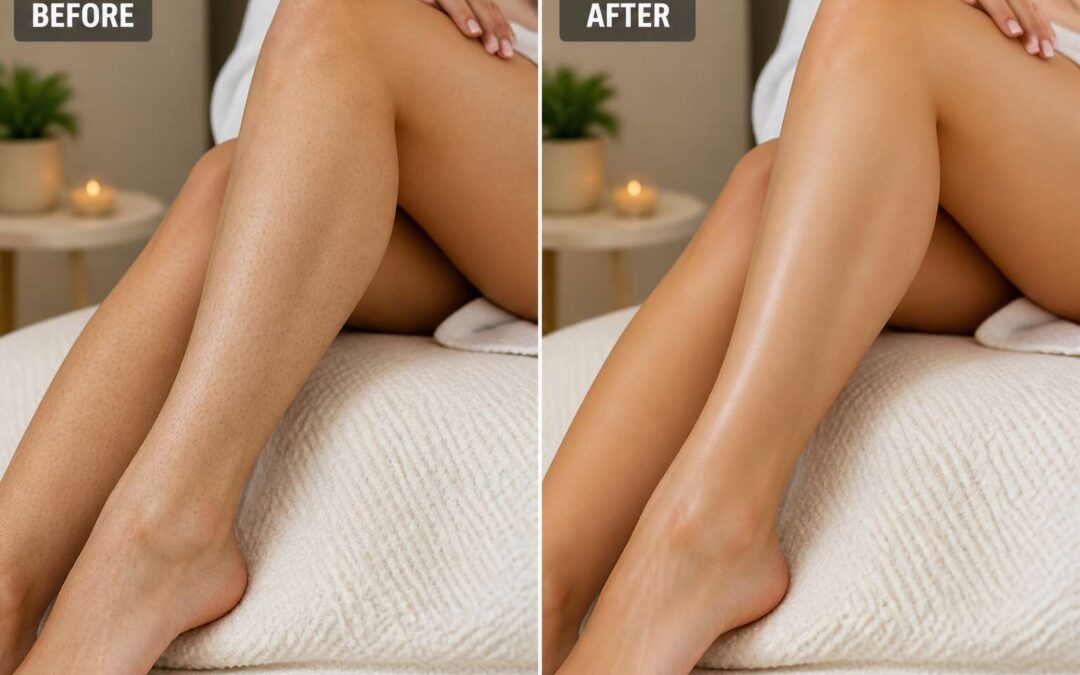
Understanding the Timeline of Laser Hair Removal Results
What to Expect After Each Treatment Session
The process of laser hair removal unfolds gradually. After the first session, hair appears to grow normally for two to three weeks, then sheds from the follicle. This is not regrowth; it is the follicle releasing the destroyed hair.
Experience shows that each treatment brings a distinct shift. Consider this expected progression:
- Session one: Reduction starts, but hair remains in the telogen phase.
- Session two: Shedding accelerates, and patches of smoother skin appear.
- Session three: Vellus hair replaces coarser strands in treated areas.
- Session four: Significant thinning becomes visible.
- Session five: Only sparse, fine hairs remain.
- Session six: The final session consolidates results.
A month after the sixth session, the skin reveals the full effect of laser hair removal 6 sessions before and after. I always remind clients that each session targets follicles in different growth stages, which is why patience matters so much! The pause between treatments ensures maximum destruction, and this timeline holds true for most skin types, though individual responses vary.
The Hair Growth Cycle and Why Six Sessions Are Recommended
In the pursuit of smooth, carefree skin, time is the quiet collaborator. Hair growth operates on a cycle of anagen, catagen, and telogen phases. The laser only truly engages with follicles in the active anagen stage, where pigment is abundant and the hair is anchored. Since these cycles are asynchronous across the body, a single treatment simply cannot capture every follicle at its most vulnerable moment. This biological rhythm is the reason the full effect of laser hair removal 6 sessions before and after unfolds over a period of months.
A common misunderstanding is that the process should yield immediate, permanent emptiness after one visit. Instead, we are working with a system that regenerates on its own schedule. The spacing of appointments is engineered to intercept successive waves of growth. As new hairs transition into the anagen phase, subsequent laser pulses catch them and deliver their thermal energy to the root. The cumulative result is a progressive reduction in density that becomes undeniable by the sixth visit.
Why is half a dozen the standard for most clinical protocols? It is a number born from the mathematics of biology. A typical hair cycle lasts roughly four to twelve weeks, depending on the area of the body.
– The anagen phase is the growth period, where the follicle is connected to the dermal papilla and susceptible to laser heat.
– The catagen phase is a transitional regression, where the follicle shrinks and detaches from the blood supply.
– The telogen phase is the resting period, where the old hair is shed before the cycle starts anew.
To affect a meaningful percentage of the total follicular population, the strategy requires covering multiple cycles. Six sessions allow the clinician to map the landscape of your skin over a full seasonal shift, treating each follicle as it awakens. By the end of this arc, the skin has often entered a state of dormancy that feels foreign to those accustomed to constant maintenance. The permanence is not absolute, but the transformation is profound. When you finally observe your skin in the mirror a few weeks after that sixth appointment, the clarity of the results reflects the patience invested along the way. This is the true narrative of laser hair removal 6 sessions before and after, a story written in the language of cellular biology and consistent scheduling.
How Skin Tone and Hair Color Impact Your Personalized Timeline
Patience is the active ingredient in laser hair removal 6 sessions before and after, but the calendar is not universal. Your timeline depends on the melanin lottery. Dark, coarse hair absorbs laser energy readily, while fair, fine hair barely responds.
Skin tone matters equally. Sophisticated devices separate melanin in the hair from melanin in the skin, yet a deep tan still complicates the math. Clinicians adjust fluence and pulse duration to match your unique contrast ratio. This is why your six-session arc might differ from your friend’s by weeks.
- High contrast, dark hair on light skin, often shows visible clearing by session four.
- Low contrast, red or blonde hair on deeper skin, may need the full six and beyond.
The Six-Session Journey: A Detailed Before and After Breakdown
Sessions One and Two: Shedding, Redness, and Early Reduction
The first two sessions of a laser hair removal 6 sessions before and after series rarely behave like a straight line. Days after your initial appointment, treated hairs begin shedding, often surfacing as dark stubble that looks untouched. I tell clients to expect this: the follicle is releasing a compromised hair, not resisting the laser. Redness and faint texture around each follicle may linger for a day or two, similar to a light sunburn.
By the second session, measurable change emerges. Regrowth turns sparser, and new hairs come through thinner and paler. The distribution stays uneven, which unsettles many people. Yet this patchiness is the expected signature of early reduction. The genuine payoff of the laser hair removal 6 sessions before and after journey only appears once later sessions consolidate these small victories.
Sessions Three and Four: Noticeable Thinning and Patchy Regrowth
Halfway through the laser hair removal 6 sessions before and after series, the results look uneven and confusing. The early shedding fades, and what remains is visibly thinner hair growing in irregular patches.
Clients often worry about the patchiness, mistaking it for failure. It is the opposite! I tell people to trust this phase. The laser has disabled the most active follicles, leaving stragglers that still cycle. This uneven regrowth signals progress.
- Regrowth that appears only in specific zones, often the edges or denser areas
- Individual hairs that are finer and lighter, but still present
- Skin that remains smooth for stretches, then shows isolated strands
The real change is the reduction in density. Some areas go weeks without regrowth. Others seem stubborn. This is the body normalising its response to the laser.
Sessions Five and Six: Dramatic Hair Loss and Smoothing of the Skin
Now we reach the final stretch. By sessions five and six of the laser hair removal 6 sessions before and after series, the visual payoff finally arrives. The patchy regrowth from the midpoint has largely vanished. What remains is a significant reduction in hair volume that changes the texture of daily life.
The skin feels different here. It is smoother to the touch, and the interference of constant shaving or waxing fades into memory. For many clients, this is the first time they can run a hand over their legs or underarms without feeling any stubble. This is not a clinical observation; it is the reported experience of people who have completed the course.
I often ask clients to describe the change. The response is usually about the silence of the routine. The absence of hair is a physical characteristic, but the absence of planning around hair removal is the real liberation. The follicle is not dead, but it is dormant in a way that mimics the result we were aiming for.
Here is what we typically observe in these final sessions:
– Hair that does regrow is often too fine to notice by touch alone.
– The growth interval extends dramatically, often by several weeks.
– Ingrown hairs, which plagued earlier phases, stop forming altogether.
The laser hair removal 6 sessions before and after narrative solidifies in this phase. The skin does not just look bare; it looks calm. The redness and irritation that accompanied the earlier treatments are gone. The improvement is cumulative, but the visual jump between session four and session six is stark. By the end, the areas treated feel foreign to the client, but in the best way possible. It feels like the body has reached a new equilibrium.
Realistic Changes in Hair Density and Thickness Over Six Treatments
A standard laser hair removal 6 sessions before and after record shows a 60 to 80 percent drop in hair density. That number only tells part of the story. The thickness of whatever remains changes just as much.
By the end of the course, the hair that does regrow is not the same hair that started. The shafts are narrower. The colour is lighter. The growth phase shortens, so the treated area spends more time smooth. This is the realistic outcome of six treatments working through the anagen, catagen, and telogen phases repeatedly.
Three patterns hold true for most clients across the full series:
- Density falls steadily, with the largest visible leap midway through.
- The thickness of regrowth drops to a fine, unpigmented texture.
- The regrowth interval stretches, so maintenance sessions become spaced months apart.
I hear from South African clients that the final result is simply easier to maintain. Each session strips a little more strength from the follicle until the remaining hair is sparse, soft, and slow to return.
Visual Indicators That Your Progress Is on Track
The mirror becomes your honest coach across the treatment plan. The laser hair removal 6 sessions before and after story reveals itself through specific visual clues, not just through the hair that disappears. Watch the skin between hairs. Treated follicles lose their dark anchoring points, and the surface feels different under your palm, smoother in a way that has nothing to do with shaving.
Early on, redness fades faster after each visit. That is your first green light. By the third session, patchiness actually signals progress when it appears as fine, sparse regrowth rather than coarse stubble.
– Skin tone evens out where hair once created shadow
– Regrown hairs emerge thinner, lighter, and less visible
– Ingrown hairs become less frequent with each session
These markers matter more than any single mirror check. They confirm the follicle is losing its grip, which is the true measure of progress in any laser hair removal 6 sessions before and after review. The six-session journey resolves into calmer skin and weaker regrowth. Each new cycle gives the technician a cleaner canvas to work with, and the follicle slowly exhausts itself. That is the underlying story your skin tells.
Factors That Determine Your Six-Session Outcome
The Importance of Consistent Appointment Intervals
The interval between each appointment holds more power than most people realise. Your laser hair removal 6 sessions before and after results hinge on consistency, and the process works best when hair is caught in the same growth phase every time.
Several factors can quietly alter your outcome:
- Hormonal fluctuations from pregnancy or PCOS
- Certain medications that increase photosensitivity
- Sun exposure at any point during the treatment window
Skipping a session resets the clock. The follicle slips back into a dormant stage, and you lose the momentum built by the previous blast of light. I always tell clients to treat their appointment dates like non-negotiable meetings with themselves. If you want a genuine laser hair removal 6 sessions before and after transformation, close the gaps.
Hormonal Shifts and Their Effect on Regrowth Patterns
Pregnancy hormones alone can double hair follicle activity within weeks. That single fact explains why your laser hair removal 6 sessions before and after results may deviate from your planned timeline.
Hormonal shifts routinely alter laser outcomes. The main culprits include:
- Thyroid dysfunction that speeds up or stalls hair cycling
- PCOS-related androgen surges that recruit new follicles
- Menopause-related oestrogen loss that alters regrowth timing
Some hair rests. Some hair rushes forward! When your cycle changes mid-treatment, regrowth patterns scatter. I have seen clients follow every rule and still see uneven results, purely because their endocrine system changed direction. Your laser hair removal 6 sessions before and after results will only match the brochure if your hormone levels stay stable. The laser targets what is present. It cannot prevent new hair from surfacing after your session.
Choosing the Right Laser Wavelength for Your Skin Type
No single laser erases every shadow. For six sessions to yield permanent reduction, the wavelength must align with your skin’s melanin load. A 1064 nm Nd:YAG wavelength penetrates beyond the epidermis, sparing darker South African skin. A 755 nm Alexandrite works for fair complexions but risks burns when melanin density rises. Choose the wrong one, and regrowth continues.
Your laser hair removal 6 sessions before and after results hinge on three variables: hair follicle depth, skin reflectance, and wavelength absorption. I have treated patients whose progress faltered because the technician never recalibrated the fluence between appointments.
- Alexandrite: light skin, dark coarse hair.
- Nd:YAG: all skin tones, safest for melanin-rich skin.
Each session demands a wavelength check. The cooling gel protects the upper layer while the beam descends. Look at any reliable laser hair removal 6 sessions before and after record, and you will see that the laser’s technical settings, not hope, decide the outcome.
Pre-Treatment and Post-Treatment Protocols That Influence Final Results
Pre-treatment discipline changes the trajectory of your laser hair removal 6 sessions before and after results. The skin must be clean, shaved close, and free of active tan. In South Africa’s high UV climate, a single week of sun exposure before a session can force the technician to lower the fluence, which weakens each pulse’s impact on the follicle.
Post-treatment protocols carry equal weight. Heated water, intense workouts, and tight clothing in the first 48 hours can aggravate the treated zone. Apply sunblock from day one, because residual hyperpigmentation obscures the true outcome. What you do between visits shapes what your laser hair removal 6 sessions before and after images actually reveal.
The routine surrounding each appointment:
– Keep the area moisturised twice daily
– Skip waxing or tweezing between sessions
– Report persistent irritation before your next booking
These habits, repeated across six sessions, separate average shedding from genuine permanent reduction.
What a 6-Session Before and After Photo Doesn’t Reveal
The Science of Delayed Shedding and the Appearance of ‘Ghost’ Hairs
A laser hair removal 6 sessions before and after photo tells a story. The image omits the weeks of delayed shedding, when treated hairs remain lodged under the surface. These ghost hairs appear as dark stubble after your final appointment. They are not regrowth. The follicle is already dead.
Each session leaves hair in a state of suspended exit. The root is destroyed, yet the strand stays put for days or even weeks. Clients mistake this for failure. The laser hair removal 6 sessions before and after gallery cannot show this period, because the camera misses the confusion. The mirror shows what the photograph conceals:
- The hair lifts only after the follicle fully separates.
- Dead hairs exit during washing, exfoliating, or natural renewal.
- Some hairs shed on a ten-day delay, well after the clinic visit.
The 6 sessions are only half the story. The rest unfolds while you wait.
Why Patchy Progress Is Normal During the Treatment Cycle
The laser hair removal 6 sessions before and after photo is a curated artifact. It captures a final state, not the intermediate chaos. Patchy progress defines the treatment cycle. One area will look barren while another still shows activity. This unevenness, often mistaken for inconsistency, is the follicle responding at its own pace. Different hair densities across the body shed on different timelines.
Consider what the camera frame excludes:
– The cycle where only some follicles release their shafts.
– The weeks when thinning looks like straggly regrowth.
– The sessions where progress appears to stall entirely.
The photo cannot convey this. I have seen clients misread this patchwork phase as failure. It shows a finish line, not the staggered journey. For South African patients, understanding this irregular shedding is essential. The treatment cycle is a gradual peeling away of hair. That is the truth the image hides.
The Dormant Follicle Effect and the Need for Maintenance Sessions
The laser hair removal 6 sessions before and after photo you see on a clinic website is a single frame. It cannot show the dormant follicle effect, the way some follicles slip into a resting state instead of dying. Those follicles stay quiet for months. Then a hormonal shift wakes them.
That is why maintenance sessions are not optional. The picture also hides time. Six treatments clear most hair, but the follicles that survive do so on their own schedule. A single image tells you nothing about what regrowth looks like eight months later.
Maximizing Your Results Between Six-Session Milestones
Skincare Adjustments to Calm and Protect Laser-Treated Areas
The real payoff from laser hair removal 6 sessions before and after emerges when you treat the healing phase as deliberately as the appointment itself. Your skin’s microbiome shifts after each pulse, leaving it thirsty for barrier support. I always tell clients to switch from ambitious serums to a sparse, soothing roster during the interims.
Sun avoidance becomes non-negotiable. Broad-spectrum sunscreen, reapplied every two hours, prevents rebound pigmentation that clouds results. Also, skip intense workouts until redness subsides, as sweat irritates newly charred follicles.
- Cleanse with lukewarm water only.
- Layer a single calming ingredient like aloe or panthenol.
- Wear loose, breathable fabrics over treated zones.
These small rituals keep inflammation low, which stabilizes the follicular response! Without them, even a perfect six-session plan yields uneven texture. Your between-visit diligence quietly decides how dramatic and durable the final smoothness turns out to be.
Proper Shaving and Exfoliation Techniques to Support Hair Shedding
Here’s a truth that stings more than a missed appointment: the laser damages the follicle, but your razor removes the dead strands. After each session, treated hairs must shed naturally, so a sharp razor on shortened growth lets them exit cleanly. Shave every few days, but only once redness settles, typically after 24 hours.
Exfoliation starts on day five, using a soft washcloth in circles. This supports the shedding phase, revealing smoother skin sooner. For the laser hair removal 6 sessions before and after outcome, your weekly routine matters more than any single appointment.
- Shave with the grain to reduce friction.
- Moisturize with fragrance free lotion.
- Stop exfoliating if skin feels irritated.
Avoid waxing, tweezing, or threading, as these rip the root and confuse the laser’s targeting. Keep the area clean and dry between sessions. These small rituals compound across six treatments, turning patchy regrowth into a consistent finish.
Sun Exposure and Self-Tanner Precautions During the Full Treatment Period
A single hour of South African sun can undo a session’s work. The laser hair removal 6 sessions before and after outcome hinges on skin that remains unpigmented during treatment. A tan, even a light one, redirects laser energy toward surface melanin. This weakens the follicle response and raises the burn risk. Daily SPF 50 on treated areas is the baseline, even on overcast days.
Self-tanner carries a subtler danger. Artificial pigments sit on the skin’s surface and scatter the beam. Using it within two weeks of an appointment can create irregular absorption, leaving patchy areas. The safer window for self-tanner is after redness fully resolves and well before the next session.
These precautions preserve the cumulative effect across all six appointments, so the final result matches the investment.
Tracking and Photographing Your Progress for a True Before and After Comparison
Tracking your laser hair removal 6 sessions before and after demands a consistent routine. I ask clients to photograph the area in the same room, with the same phone and at the same hour. This removes guesswork. Your eyes adjust to gradual changes, but a photo does not.
- Take a baseline image before session one.
- Add a photo 48 hours after each treatment.
- Keep everything in one labelled folder.
After a few weeks, these images reveal patterns that you might miss. The patchiness of regrowth starts to look less like a setback and more like a phase. By the time you finish, the side by side view gives you a genuine laser hair removal 6 sessions before and after comparison. No memory is that precise!
Red Flags That Indicate You Should Consult Your Laser Specialist
Most people lose focus between laser sessions, and that is where progress gets won or lost! I tell clients to treat every interval as part of the treatment itself. Keep the area clean, moisturised, and out of direct sun. Shave when needed, but avoid plucking or waxing. These small habits push your laser hair removal 6 sessions before and after results further than you expect.
Some signs demand immediate attention:
- Severe blistering or weeping
- Dark patches that do not fade
- Pain beyond mild tenderness
Unusual swelling or textural changes are also red flags. Your laser specialist should be consulted right away, as a quick check protects your skin and keeps the full course on track.