
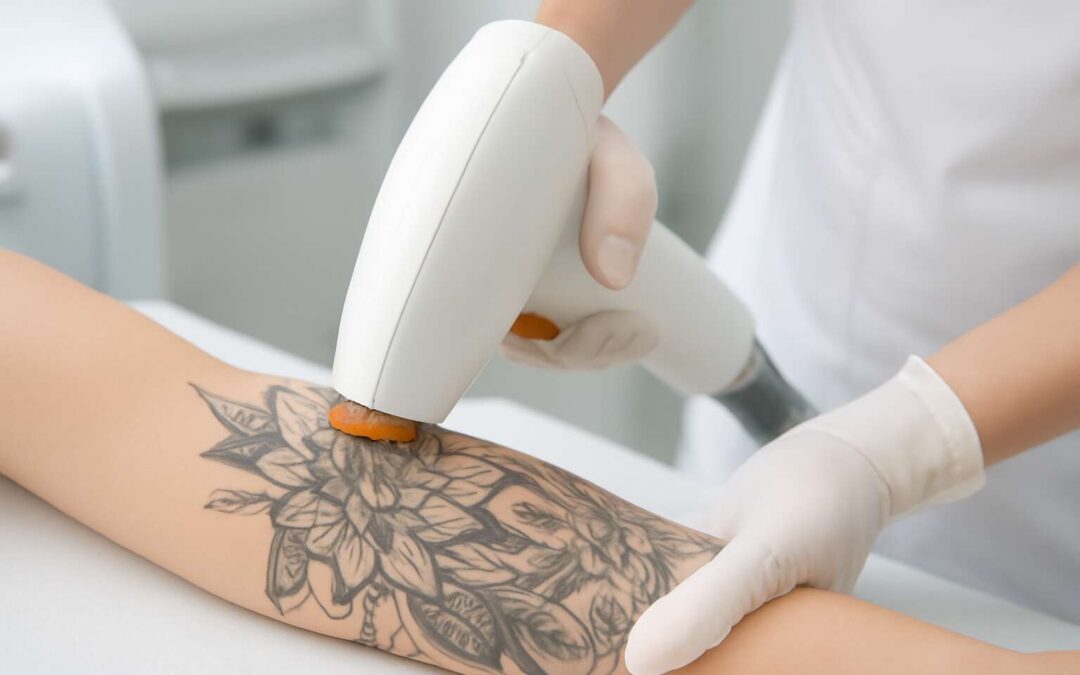
Understanding laser hair removal with tattoos
Ink colors and laser compatibility
Ink and light share a curious fate on the skin’s stage. Understanding laser hair removal over tattoo begins with how ink colors influence laser compatibility. Dark pigments can become heat traps, while pale tones alter energy flow near the surface.
To navigate this enchanted territory, consider how ink hue affects laser choice and safety.
- Black ink absorbs more energy, requiring cautious wavelength choice near tattoo lines.
- Bright colors can scatter energy, often needing lower intensity or different wavelengths.
- Multicolor tattoos may limit options; some methods treat around the ink rather than over it.
In practical terms, clinicians in South Africa tailor settings to protect tattooed skin while targeting hair, guiding clients with clarity and care. The aim is precise removal without disturbing the artistry etched into the skin.
Tattoo depth and location considerations
Tattoo depth and location set the stage for laser hair removal over tattoo. It’s not just ink; it’s architecture under the skin, a map that guides pulses. Ink is a map, and lasers read its contours in a shadowed dialect. A South African clinician often reminds us: ‘Ink is a map, and lasers hear its echo.’
Depth determines how pigment influences energy flow. Pigment sits in the dermis, and its depth can alter heat distribution even as the follicle absorbs light. When ink lies near the surface, energy can scatter or concentrate near the lines, demanding gentler beam control.
Location matters too—over bending joints, ribcage, or other prominences, ink can distort the treatment geometry. In South Africa, clinics tailor the approach to protect tattooed skin while still targeting hair, guiding clients with clarity and care as the narrative of skin, pigment, and light unfolds.
Skin type and healing response
In a country where sun and style collide, elegance awakens when pigment, skin, and light strike a balance. Across South Africa’s sunlit mornings, the conversation around laser hair removal over tattoo carries a quiet elegance. Skin and pigment become a duet, where timing and tone decide the rhythm. Each client carries a map of their own healing, and with care, light finds its mark.
Understanding skin type illuminates the process. I’ve seen how lighter tones respond differently from deeper melanin, and how healing scripts shift with climate, hydration, and sun habits. In clinic conversations, the body writes its own response in real time.
- Fitzpatrick-informed considerations
- Melanin distribution and heat confinement
- Sun exposure and pigment stability
Healing response varies by skin type, age, and micro-circulation. The choreography between light and pigment unfolds like a short, luminous tragedy—beautiful, brief, and instructive for those who witness it. We measure patience as carefully as we measure energy, and the skin’s story writes itself in time.
Consultation and risk reduction strategies
In South Africa, more than half of first-time clients ask about tattoo safety before laser work. That curiosity isn’t a hurdle—it’s guidance. Understanding laser hair removal over tattoo begins with a candid consultation that respects pigment, location, and how light behaves on skin.
During consultation, clinicians map how the tattoo sits in relation to energy, how the skin handles heat, and how sun exposure could shift pigment stability. Risk reduction hinges on honest dialogue and patient history—hydration, recent sun, and medications all influence outcomes. In practice, I find that a careful, patient-centered talk often predicts the path forward more reliably than any chart.
- Comprehensive risk review that considers pigment interaction and healing history
- Sun exposure and hydration history to gauge pigment stability
- Scheduling considerations to align with tattoo care and skin condition
With this approach, the trajectory remains measured and respectful of both aesthetics and safety, a balance South Africans value at clinics near the coast and inland.