
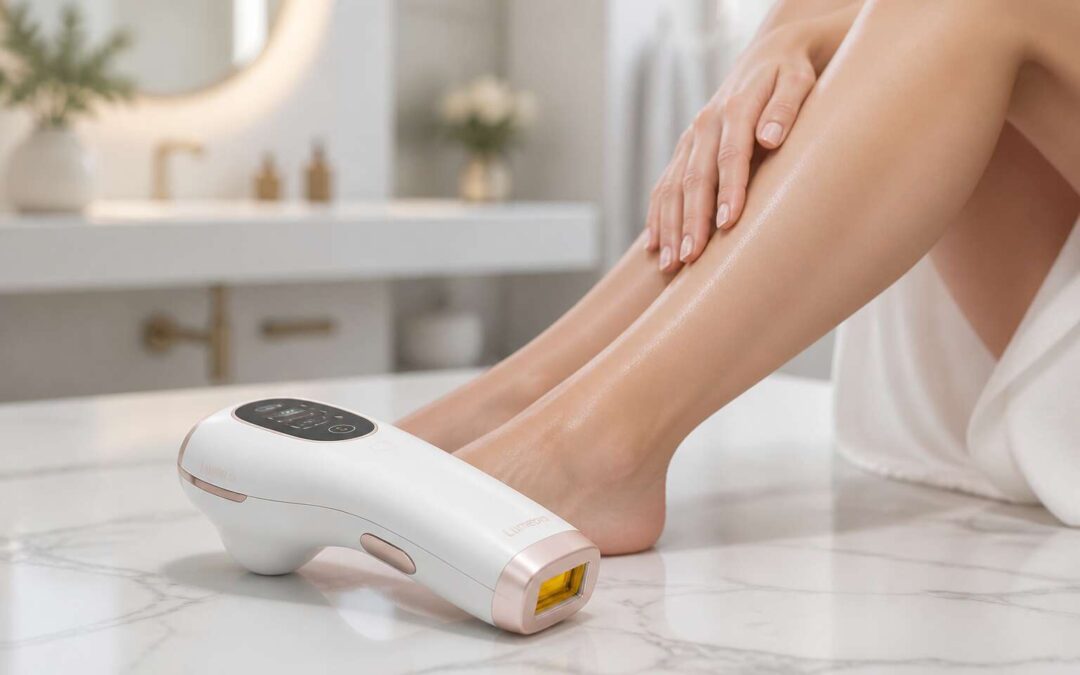
Understanding Laser Hair Removal
How Laser Hair Removal Works
Understanding how laser hair removal works requires a look at selective photothermolysis. The device emits light absorbed by melanin in the hair follicle. That light turns to heat, damaging the follicle while skin stays cool. Hair grows in three stages, so only follicles in the active anagen phase respond. This is why multiple sessions are essential.
If you search for laser hair removal takealot, you will see both IPL and true laser options. They share this principle but differ in energy and wavelength. Several factors influence the result:
- Contrast between skin and hair colour
- Device settings and build quality
- How regularly you commit to sessions
Key Benefits Over Traditional Methods
The R30,000 spent on waxing over a decade often yields nothing but recurring ingrown hairs and a thickening regrowth pattern. This is why the shift to laser hair removal takealot is more than a convenience trend. It is a recalibration of how you manage your skin. Traditional methods remove the hair you see today. They do nothing to alter the follicle’s capacity to produce tomorrow’s hair. Laser technology disrupts that cycle, offering a trajectory toward permanent reduction.
The savings are not abstract. Consider the cumulative expenditure on razors, depilatory creams, and monthly salon appointments. The cost is embedded in time spent on upkeep, calming razor burn, and scheduling around regrowth. A home device shifts this dynamic. It compresses the maintenance timeline into a predictable protocol.
– Reduction of pseudofolliculitis barbae, commonly known as razor bumps.
– Diminishment of skin hyperpigmentation caused by chronic shaving trauma.
– Elimination of the chemical exposure found in depilatory products.
– A move towards smoother skin texture without the stubble shadow.
The efficacy of this method depends heavily on your specific biological markers. Your hair color, skin tone, and hormonal balance dictate the outcome. A device purchased via laser hair removal takealot offers the privacy to manage this process on your own schedule. This is not about aesthetics alone. It is about recovering the hours lost to a ritual that offers no lasting solution.
Popular Laser Hair Removal Devices
At-Home Laser vs Professional Treatments
Salon lasers output 2,500 watts per pulse. Home devices manage a fraction of that. This difference matters when you search for laser hair removal takealot, because the online marketplace stocks both medical-grade machines and consumer IPL units.
Professional systems use targeted wavelengths and active cooling, which explains why clinics promise longer lasting results. Home devices require patience. They work best on pale skin with dark hair and demand weekly use for several months.
Popular at-home models include:
– Philips Lumea, which reads skin tone continuously
– Braun Silk Expert Pro, a favourite among local reviewers
– Remington iLight, often the entry level pick
The real distinction is risk. A clinic technician adjusts fluence for your skin type. A home device cannot. So while laser hair removal takealot offers convenience, professional treatment remains the safer investment for anyone with deeper skin tones.
Top Features to Look For
Most consumers compare wattage when choosing a device, but the real determinant of permanent hair reduction is the energy density per pulse. When you search for laser hair removal takealot,that spec often hides in the fine print.
Here are the features that separate a functional device from an ineffective one:
- Wavelength, which should exceed 650 nm to minimize melanin absorption risk
- Skin tone sensor, that halts emission if the tone is too deep for safe fluence
- Glide mode, allowing you to sweep across large areas without repetitive stamping
- Cooling tip, which lowers surface temperature to prevent burns
- Treatment window size, which cuts session time by covering more skin per flash
- Capacitor quality, which maintains energy output across hundreds of pulses
The capacitor often receives the least attention, yet it defines the device’s lifespan. A weak capacitor bank may drop fluence by 30 percent after a year. that explains why some users see no results beyond the initial weeks. Compare the continuous pulse count in laser hair removal takealot listings, because that number reflects full-energy flashes, nor merely total flashes.
Comparing IPL and True Laser Technology
The glow of an IPL flash is broad, scattered light. True laser is a single, focused wavelength. That fundamental distinction separates the devices listed on laser hair removal takealot today. Most affordable models are Intense Pulsed Light, or IPL, emitters. They use diffuse energy to heat the follicle, which is effective but slow. True lasers, such as diode or alexandrite, deliver that energy as a concentrated beam. This allows for higher fluence per pulse.
When I scan takealot listings, I check the technology type before anything else. IPL requires less energy, but it also demands more sessions for lasting results. A true laser, despite the higher price, drives depth efficiently. The permanence of your outcome hinges on that singular, precise beam.
Understanding Fluence and Wavelength
As I sift through laser hair removal takealot listings, the advertised wavelength is the first number that catches my eye. Alexandrite devices sit at 755nm, while diode systems hover near 810nm, and Nd:YAG stretches to 1064nm. That last one penetrates deeper, making it safer for melanin-rich skin. Fluence, the energy packed into each pulse, works in tandem. A high fluence with a shallow wavelength can singe the surface. A low fluence with a deep wavelength misses the bulb entirely. Popular devices balance both variables.
Here is a quick reference for common wavelengths.
- 755nm for light to olive skin
- 810nm for most South African skin tones
- 1064nm for darker complexions
Yet the fluence on the box rarely tells the full story. Some laser hair removal takealot listings promise a fixed fluence; others let you tailor the strike to your pain tolerance.
How to Shop for Laser Hair Removal on Takealot
Searching for Trusted Brands and Sellers
Nearly 30% of all online returns stem from buyers who skipped the research phase and relied on glossy product photos alone. When you search for laser hair removal takealot offers a similar trap. The marketplace hosts hundreds of devices, but the listing page is not the final truth. You must dig into the seller’s history, read the negative reviews first, and scrutinise the response rate to returns.
The human mind craves certainty, yet certainty is a rare commodity in this category. I have learned to filter for sellers with a track record of answering technical queries, not just shipping boxes. The platform’s search bar is a starting point, but your real tool is the “Customer Questions” tab. One seller may list a device with impressive fluence numbers, but their answers reveal a lack of precision.
A reliable order of operations looks like this:
1. Verify the seller’s store rating and the age of their account.
2. Cross-check the device model on the manufacturer’s website.
3. Read the one-star reviews for complaints about skin burns or ineffective pulses.
A rushed purchase here often leads to a wasted investment. A careful search for laser hair removal takealot gives you access to community feedback. The device itself is a tool, but the seller is the gatekeeper of your safety and your satisfaction.
Reading Customer Reviews and Ratings
The numbers on a rating scale often hide the true story. On Takealot, the average score for any laser hair removal device can mislead the careless buyer. I read the one and two star reviews first. Those pages hold the accounts of burns, patchy results, and broken promises.
Look at the dates of the complaints. A cluster after a specific shipment batch signals a quality failure. The seller responses matter more than the compliments. A dismissive reply is a clear warning. A thoughtful answer shows accountability.
- Verified purchases only.
- Reviews that mention pain or blistering.
- Responses to negative feedback.
The search for laser hair removal takealot becomes safer when you heed the voices of those who bought before you.
Making the Most of Deals and Promotions
To maximize your satisfaction with laser hair removal Takealot, start by reading customer reviews. A product with high popularity among users often indicates that it effectively reduces hair growth. However, pay close attention to the context of each review. A long-term user can provide more valuable insights than a short-term one. If a reviewer mentions that they have used the device for two months or more, their feedback on results is more trustworthy. Look for detailed commentary on irritation levels and hair regrowth speed.
The chronological order of reviews is also informative. Consistent feedback over several months is a positive indicator of reliability. A sudden cluster of one-star ratings after a firmware update or a new batch of devices could signal a quality control problem. It is also wise to read the one and two-star reviews. These reviews often highlight specific issues, such as an unpleasant electrical sensation or a small treatment window. The seller’s responses to these negative reviews matter. A professional response that offers solutions or a replacement shows a commitment to customer service. This is more valuable than a dismissive comment that blames the user for the issue.
Your life is busy. The convenience of performing treatments at home is a major reason why laser hair removal Takealot is so popular. You can schedule a session while watching television or during a video call. Compared to a clinical appointment, At-Home Devices Ringwood use a lower intensity setting. This reduces the risk of a painful experience when you accidentally expose a mole or a tattoo to the light. Always check the specifications for the energy output, measured in joules per square centimeter, of any device you consider.
The biggest question is whether you prefer an IPL device or an actual laser. IPL uses a broad spectrum of light, while laser uses a single wavelength. Understand the difference before you add a device to your cart. Your skin’s sensitivity levels and your hair color will determine the best choice. IPL devices are often less expensive and can be very effective on dark hair with light skin. Conversely, a diode laser uses polarized light, which is more targeted. This precision makes it a better option for darker skin tones.
Before you compare prices, take a careful look at the packaging and contents. A good deal should include a treatment head that covers a large area for your legs and another smaller head for your face or bikini line. The presence of a skin tone sensor is another critical feature. This sensor prevents the device from flashing if your skin is too dark for the current setting. Check the cord length. The ability to comfortably use a grounded outlet in your bathroom is a practical requirement.
Movable costs can change quickly. One compelling reason to shop for laser hair removal Takealot is the competition between sellers, which can lead to price drops. Add the item to your wishlist for life and monitor short-term discounts. Some included accessories, such as a free pair of safety goggles or a high-quality shaving razor, are worth a slight increase in price. If a deal includes a full refund within a reasonable period, it lowers your financial risk. You have time to test the device at home. A poor return policy is a significant warning sign, so understand the terms before you pay.
One practical tip for your first session is to shave the area a few hours beforehand. The device light will have a better chance to reach the hair follicle. Start with the lowest setting at the first point of contact. This allows you to assess your skin’s reaction. If you feel a slight warming sensation, you have likely chosen the correct level. If it feels like a sharp rubber band snap, that’s too intense and you should decrease the power. After your first session, you will see results.
Before adding a device to your shopping cart, verify the correct voltage for your country. Some devices are designed for 220-240V, which is the standard physical connector in South Africa. Purchasing a device from a seller who ships from the United States might require a voltage converter. This will add to the overall cost and complexity of the ordering process.
A smaller supplier might offer a more unique product but with less accountability. Larger, established brands on laser hair removal Takealot often have a better history of honoring warranties. Always contact the seller to confirm the device’s safety on your specific skin type. A reliable seller will give you a clear, honest answer. If you see “maybe” or “it should be fine,” it is a signal to keep looking.
By focusing on these details, you move beyond just finding the cheapest price. You are buying a long-term solution. The right device will save you time and money over the years. It is a straightforward decision when you focus on the facts. When the device arrives, unbox it carefully, and charge it fully. Follow the instructions and your experience will be positive. Once your skin is smooth and hair-free, see if you can find a discount code for a friend.
Checking Delivery and Return Policies
Nothing kills the thrill of a laser hair removal Takealot order faster than a courier who treats your package like a hot potato. Before you click that shiny yellow button, check the estimated delivery window. Some sellers ship from overseas, which means your device might arrive after your holiday, your patience, or both. Look for local stock with a delivery promise measured in days, not epochs.
Returns are where the real comedy unfolds. A device that zaps you like a static-charged doorknob deserves a second chance, but only if the seller offers a reasonable return window. Verify who covers the shipping cost for returns. If the policy reads like a cryptic crossword puzzle, contact the seller before you commit. A straightforward return policy is your safety net when the device turns out to be more taser than treatment.
- Confirm the seller’s physical address and contact details
- Ask whether returns require original packaging and proof of purchase
- Check if the warranty covers electrical faults, not just user error
Delivery insurance matters too. If the box arrives dented or the internals rattle like a maraca, you need clear recourse. Ask the seller how they handle transit damage. A clear answer beats a customer service black hole every time.
Tailoring Your Choice to Skin Type and Hair Colour
Identifying Your Fitzpatrick Skin Type
Every centimetre of skin carries a phototype that dictates how laser energy behaves. When shopping for a laser hair removal takealot device, your Fitzpatrick skin type is the most critical specification. Type I skin burns within minutes, while Type VI absorbs light into pigment, changing what a treatment can safely achieve.
Hair colour complicates this further. Dark hairs on light skin create the ideal target, but blonde, grey, or red hairs contain too little melanin for effective absorption in many true lasers.
Consider these realities:
- Type I to III allows higher energy delivery.
- Type IV to VI demands lower fluence and longer pause intervals.
- Recent sun exposure shifts your type upward temporarily.
Your choice, then, is not about the machine alone. It is about matching the device’s wavelength to your own melanin profile. The takealot listing displays specifications that only make sense in the context of your phototype.
What Hair Colours Respond Best?
When you scan a laser hair removal takealot listing, the numbers matter only if you know your own parameters. Pairing your Fitzpatrick skin type with your hair’s melanin load determines the treatment’s safety and efficacy.
Black and dark brown hairs absorb laser energy at high rates, converting it to targeted heat. Medium brown hairs respond with increased fluence, but red, blonde, grey, and white hairs often miss the melanin threshold entirely. Many home lasers cannot address them.
- Black and dark brown: optimal absorption
- Medium brown: needs precise calibration
- Red, blonde, grey, white: generally unsuitable
Your choice of a device should respect these distinctions. Higher skin phototypes demand lower energy and longer pauses, regardless of how dark the hair appears.
Selecting the Right Intensity Settings
On a laser hair removal takealot page, the intensity slider looks like a simple control. It is not. Your skin type and hair colour turn that slider into a safety mechanism. I have watched buyers ignore this and choose maximum energy out of misplaced optimism.
Darker Fitzpatrick types need lower energies to prevent epidermal damage. Lighter hair requires higher settings, but with reduced predictability. These factors create a narrow operational band. Some devices offer five energy levels. Others provide three. The number matters less than how the device calibrates delivery. A Type IV user with dark brown hair faces different risks than a Type II user with fine black hair. The first risks burns. The second responds well at moderate fluence.
Generic advice fails here. Your skin’s reaction, observed through a patch test, carries more authority than any specification sheet.
Skin Sensitivity and Patch Testing
Your skin type and hair colour dictate results. A device that works for one person may burn another. On a laser hair removal takealot page, technical specs matter less than your own skin’s reaction. Lighter hair needs higher energy, but darker skin absorbs more heat. This combination creates risk. Always patch test first. Wait 24 hours and check for redness or swelling. That reaction tells you more than any review.
Follow this rule:
- Match the device’s skin tone sensor to your Fitzpatrick level.
- Choose lower fluence if you have sensitive skin.
- Avoid treated areas if you see burns or blisters.
Skin sensitivity is not a failure. It is a signal. Listen to it, and skip the urge to crank the power. The right laser hair removal takealot purchase works with your biology, not against it.
Common Mistakes to Avoid
When you shop for laser hair removal on Takealot, the biggest mistake is ignoring your skin tone and hair colour. A device that dazzles a friend may damage you. Match the wavelength to your melanin levels, and treat pale skin and dark hair as your golden rule. Don’t assume higher fluence means faster results; it means more risk. Check the sensor, read the chart, and stay honest about your skin’s limits. A small blister now cancels months of progress later. So, pick a unit with adjustable energy and a clear skin tone guide. That single choice separates silky confidence from regret.
When to Consult a Professional
South African summers punish guesswork on skin. Your Fitzpatrick type and hair pigmentation decide whether a device becomes a tool or a hazard. Darker skin holds more melanin, which redirects energy away from the follicle the laser actually targets. Pale skin with coarse dark hair remains the safest pairing. Laser hair removal Takealot listings usually display this clearly, but verify it yourself before checkout!
Some situations demand a second opinion. If you have a history of keloid scarring or active infections in the treatment area, over-the-counter units are not your answer. You need a clinician to assess your skin first. A dermatologist spots contradictions that no sensor can catch.
- A tan or recent self-tanner use
- Fine, red, grey, or white hair
- Pregnancy or photosensitising medication
Those are non-negotiable reasons to pause. When in doubt, book a patch test and request a written recommendation. That short consultation protects you from frustration and a wasted laser hair removal Takealot purchase.
Getting the Best Results and Value
Pre-Treatment Preparation Tips
We found the perfect device on laser hair removal takealot, yet the result hinged entirely on our preparation. The morning ritual became a quiet act of commitment. Too often, people forget this part, believing the machine does all the work. It does not. The skin needs a clean canvasholism. Exfoliating gently a day prior removes the barrier of dead cells, allowing the light to target the follicle directly.
Shaving is non-negotiable, but we must do it with intention. A close shave, without cream, prevents the energy from being absorbed by surface hair. This avoids potential burns and wasted pulses. Sun exposure is equally critical. A tan, whether natural or from a bottle, confuses the melanin detectors in the deviceholism. The basic groundwork:
– Exfoliate the area 24 hours before.
– Shave the treatment zone within 12 hours.
– Avoid sun exposure for a full week prior.
This discipline transforms a simple purchase into an effective, long term solution. The consistency of this routine is the real secret. Every session builds on the last, and preparation is the thread that ties them together.
Combining Deals with Bundles and Accessories
Preparation builds consistency. Accessories sustain it. Nobody buys a laser device expecting it to collect dust, yet many abandon theirs by week eight. A laser hair removal takealot bundle with cooling compresses, replacement cartridges, and a proper storage case removes the excuses that kill long term commitment.
- Compare bundle pricing against buying each item separately. Savings often reach 30 percent.
- Confirm replacement cartridges stay in stock for your model. This protects your investment.
Consumables also mark your progress. Each empty gel tube or spent cartridge equals a completed session. That record becomes a quiet motivator. Cooling substitutes protect sensitive skin, allowing you to treat larger zones in one sitting. Precision heads for knees, ankles, and the bikini line reach awkward gaps. The numbers on a laser hair removal takealot listing matter less than whether these parts remain available three years from now.
Long-Term Cost-Effectiveness vs Traditional Methods
For best results, consistency matters more than any feature. Pick a fixed day and time. Shave first, then run the device according to your skin tone and hair chart. Use the cooling gel from your laser hair removal takealot bundle. It reduces discomfort and irritation. Apply it generously on sensitive spots.
Consider the long term cost. A professional laser session for one leg costs around R600. Monthly visits add up. A home laser hair removal takealot device costs a fraction of that. Here is a simple breakdown:
- Home laser device with accessories: R3,000
- Replacement heads and gels: R500
- Total first year: R3,500
Compare that to R7,200 for just two salon areas. Year two only needs a few replacement parts. You also skip travel and queues. Results appear after eight to twelve weeks. Stick to the schedule, and hair density drops. The device pays for itself, then keeps delivering value.